-01.svg) SEO Services
SEO Services-02.svg) Local SEO Services
Local SEO Services-03.svg) AI SEO Services
AI SEO Services-04.svg) Technical SEO Services
Technical SEO Services-05.svg) Performance Marketing
Performance Marketing-06.svg) Social Media
Social Media-07.svg) Content Marketing
Content Marketing-08.svg) Web Development
Web Development-09.svg) App Development
App Development-10.svg) Marketing Automation
Marketing Automation-11.svg) Real Estate
Real Estate-12.svg) Ecommerce
Ecommerce-13.svg) Education
Education-14.svg) Healthcare
Healthcare B2B
B2B SAAS
SAAS Law Firm
 BFSI
BFSI Renewable Energy
 Tour and Travel
blog
What Is Generative Engine Optimization (GEO)? The Complete Guide to Getting Cited by AI
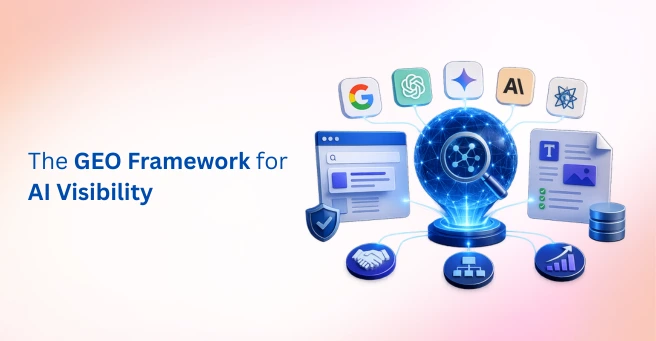
| Generative engine optimization (GEO) is the practice of structuring and strengthening content so AI answer engines like Google AI Overviews, ChatGPT, Gemini, Claude, and Perplexity AI cite it directly in generated responses. It builds on traditional SEO fundamentals, including E-E-A-T, structured data, and topical authority, while shifting the goal from ranking position to citation and inclusion in AI-generated answers. |
A business ranks first on Google for its most important keyword, and the team feels good about it. Then someone on staff asks ChatGPT the exact same question, and the brand isn’t mentioned anywhere in the answer. A competitor is cited instead, and nobody on the team can explain why.
This is the new reality search teams are adjusting to. Generative engine optimization exists precisely because search behavior is shifting from ten blue links toward a single, synthesized answer, and being cited inside that answer now matters as much as ranking on the results page beneath it.
This guide covers what generative engine optimization actually is, how AI answer engines decide what to cite, and the specific, practical steps that earn a brand a place inside those answers. A comparison table, a full pillar breakdown, a practical checklist, and seven frequently asked questions are included as well.
Data point: SparkToro and Similarweb data from June 2026 found that 68% of US Google searches ended without a click in the first four months of the year, up from 60.45% in 2024, which means fewer visitors are reaching websites directly even when those sites rank well.
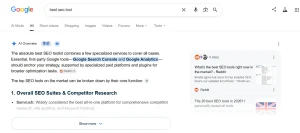
Image Source: Screenshot taken from Google SERP.
What Is Generative Engine Optimization (GEO)?
Generative engine optimization is the practice of optimizing content so it gets surfaced, cited, and quoted by AI-powered answer engines, including Google AI Overviews, ChatGPT, Gemini, Claude, and Perplexity AI. Traditional SEO targets a ranking position on a results page. GEO targets something different: being selected as a trusted source inside a generated answer.
GEO doesn’t replace SEO, and that distinction matters. It builds on the same technical and content foundation that good SEO already requires, then extends it toward a new kind of discovery layer, one where an AI system, not a human scanning a list of links, decides which sources deserve to be quoted.
| Traditional SEO | Generative Engine Optimization (GEO) |
| Optimizes for ranking position | Optimizes for citation and inclusion in AI answers |
| Success measured by clicks, rankings | Success measured by AI mentions, brand visibility |
| Targets search engine crawlers | Targets large language models and RAG retrieval systems |
| Keyword-focused | Entity- and topic-focused |
| One winner per query (position #1) | Multiple sources can be cited in a single answer |
How AI Search Engines Actually Choose What to Cite
Most AI answer engines rely on retrieval-augmented generation (RAG), which pulls information from indexed web content, knowledge graphs, and real-time search results before generating a response. Crawlability forms the foundation of this process, yet many websites overlook it. If Googlebot, an AI crawler, or a retrieval system can’t access or parse a page, AI answer engines won’t cite it, regardless of the quality of its content.
Once AI systems can access a page, they evaluate sources based on several priorities. They prefer clear, direct answers over vague explanations. They also prioritize strong topical authority over isolated, one-off pages. Likewise, they value verifiable facts over unsupported claims, while consistent entity signals across the web reinforce a brand’s credibility and identity.
Data point: SparkToro’s January 2026 content citation position study found that 44.2% of all large language model citations pull from content in the first 30% of a page, which means front-loading the core answer has a direct, measurable effect on citation likelihood.
Tip: Check whether AI crawlers like GPTBot and Google-Extended are accidentally blocked in your robots.txt file. This is one of the most common, avoidable reasons a site never gets cited, even when the content itself is strong.
The Core Pillars of Generative Engine Optimization
A handful of practices show up consistently across sites that earn AI citations. None of them are exotic. Most extend habits that already belong in a solid technical SEO and content strategy.
1. Structured, Answer-First Content
Structured, answer-first content is one of the most important elements of Generative Engine Optimization because it gives AI systems an immediate response they can quote. Placing a direct answer near the top of a page, followed by clear headings and scannable formatting, makes it easier for AI search engines to understand the context before interpreting the rest of the content
2. E-E-A-T and Trust Signals
Strong E-E-A-T and trust signals help AI systems determine whether your content is credible enough to cite. Author bios, transparent sourcing, original data, and clear citations reinforce experience, expertise, authoritativeness, and trust, the same quality signals Google has rewarded for years and that AI-powered search engines increasingly rely on when selecting sources.
3. Structured Data and Schema Markup
Structured data and schema markup help search engines and AI models interpret your content more accurately. Implementing FAQ Schema, Article Schema, and Organization Schema provides additional context about a page, helping AI systems understand the content more accurately and reducing the chances they overlook valuable information.
4. Topical Authority and Entity SEO
Building topical authority and strengthening entity SEO demonstrates that your website has deep expertise on a subject rather than isolated knowledge. Comprehensive topic clusters, supported by relevant internal links, signal depth and consistency, making AI systems more likely to trust and cite your content over pages that only cover a topic superficially
5. Brand Mentions and Citation-Worthy Content
Earning brand mentions and creating citation-worthy content strengthens your website’s credibility across the web. Mentions on authoritative publications and trusted industry websites strengthen entity recognition within knowledge graphs, giving AI systems greater confidence to recognize and cite your brand as a reliable source in AI-generated answers.
6. Technical Crawlability for AI Systems
Clean robots.txt rules, an accessible XML sitemap, reasonably fast load times, and an emerging practice called llms.txt all determine whether AI retrieval systems can reach a site’s content in the first place.
| GEO Pillar | What It Improves | Example Action |
| Answer-first content | Chance of direct quotation | Lead with a concise answer, then elaborate |
| E-E-A-T signals | Trust and credibility | Add author bios, cite sources, show expertise |
| Structured data | Machine readability | Implement FAQ and Article schema |
| Topical authority | Depth of coverage | Build keyword clusters around core topics |
| Brand mentions | Entity recognition | Earn coverage on authoritative third-party sites |
| AI crawlability | Whether AI can access content at all | Audit robots.txt, add llms.txt, submit sitemap |
How to Optimize Content for AI Citations: Practical Checklist
- Lead with a direct, well-structured answer to the core question before adding depth
- Use clear H2 and H3 headings that mirror how people actually phrase questions
- Add original data, stats, or first-hand insight to increase information gain
- Implement FAQ schema and Article schema markup wherever it fits naturally
- Build internal linking between related topic-cluster pages to reinforce topical authority
- Maintain a clean, accessible robots.txt and XML sitemap, and consider an llms.txt file
- Monitor brand mentions and pursue coverage on authoritative industry sites
Data point: ConvertMate’s AI visibility study, based on 80 million citations across more than 10,000 domains, found that content updated within the last 90 days receives a 3.2x citation multiplier compared to older content, making freshness one of the more overlooked levers in GEO.
Tip: Ask ChatGPT, Gemini, or Perplexity directly whether your brand shows up for your core topics. This simple manual check reveals AI visibility gaps faster than any tool.
How GEO Priorities Differ Across AI Platforms
Not every AI answer engine weighs the same signals the same way, and understanding the differences helps prioritize effort. Google AI Overviews draw heavily on Google’s existing search index and knowledge graph, so traditional SEO fundamentals, crawlability, structured data, and backlink authority, carry unusual weight here.
ChatGPT and Perplexity AI, by contrast, lean more on real-time retrieval and tend to favor clearly sourced, recently updated content with a distinct point of view. Perplexity in particular surfaces a noticeably different set of sources than traditional organic results, which means a page absent from page one of Google can still earn a citation there if the content itself is strong and well-attributed.
| Platform | Primary Signal Source | What It Tends to Favor |
| Google AI Overviews | Google’s search index, knowledge graph | Established rankings, structured data, backlink authority |
| ChatGPT | Web retrieval plus training data | Clear sourcing, brand consistency, direct answers |
| Perplexity AI | Real-time web retrieval | Freshness, citation-worthy detail, distinct sourcing |
| Gemini | Google’s index and knowledge graph | Entity consistency, topical authority |
Tip: Don’t optimize for a single AI platform in isolation. A site strong in Google AI Overviews but invisible on Perplexity is missing a meaningfully different audience, since overlap between the two source sets is often surprisingly small.
Common GEO Mistakes That Hurt AI Visibility
| Common GEO Mistake | Impact on AI Visibility |
|---|---|
| Thin or keyword-stuffed content | Provides little unique value for AI systems to cite |
| Blocking AI crawlers in robots.txt | Prevents AI retrieval systems from accessing your content |
| Missing structured data | Makes it harder for AI to understand and interpret page content |
| Weak E-E-A-T signals | Reduces trust and lowers the likelihood of being cited |
| Poor topical authority | Signals limited expertise on the subject |
| Outdated content | Decreases citation potential as AI favors fresher information |
| Ignoring entity consistency | Creates ambiguity about your brand across AI systems |
| Treating GEO as a one-time project | Causes AI visibility to decline as content, crawlability, and brand signals become outdated |
SEO Tip: Avoiding these common GEO mistakes improves your chances of being cited in Google AI Overviews, ChatGPT, Gemini, Claude, and Perplexity while strengthening your overall SEO strategy.
Final Thoughts
AI search optimization isn’t replacing traditional SEO. It’s extending it into a new layer of discovery, one where an algorithm reads and synthesizes before a human ever scrolls a results page. The sites earning AI citations today tend to be the same ones that were already investing in E-E-A-T, topical authority, and technical SEO health.
Investing in generative engine optimization now positions a brand for both traditional search visibility and the AI-driven discovery layer that’s only going to grow. Waiting until AI citations become the obvious, crowded battleground means starting from behind.
If figuring out where your content stands with ChatGPT, Gemini, and Google AI Overviews feels like unfamiliar territory, Tangence Solutions can help. As a full-service digital marketing and SEO services agency with expertise in both SEO and emerging GEO strategies, Tangence builds AI-ready websites, implements structured data and schema markup, strengthens topical authority through strategic content, and helps brands earn AI citations alongside traditional search rankings.
Frequently Asked Questions
1. What is generative engine optimization (GEO)?
Generative engine optimization is the practice of structuring and strengthening content so AI answer engines cite it directly in generated responses, extending traditional SEO into a new discovery layer built around AI-generated answers rather than ranked links.
2. How is GEO different from traditional SEO?
Traditional SEO optimizes for a ranking position on a results page, while GEO optimizes for being selected as a cited source inside a synthesized AI answer. The two share the same technical and content foundation but measure success differently.
3. Which AI platforms does GEO apply to?
GEO applies to any AI-powered answer engine, including Google AI Overviews, ChatGPT, Gemini, Claude, and Perplexity AI. Each platform weighs signals slightly differently, but the same core practices improve visibility across all of them.
4. Does structured data actually help with AI citations?
Yes. FAQ Schema, Article Schema, and Organization Schema help AI systems understand your page more accurately. By providing additional context, they reduce the chances of AI systems overlooking valuable information because they couldn’t interpret the content correctly.
5. Can a small business realistically compete for AI visibility?
Yes. In many cases, small businesses have a better opportunity to compete in AI search than in traditional SEO. AI answer engines can cite multiple trusted sources within a single response instead of relying on a single top-ranking website. This allows smaller businesses with authoritative, high-quality content to earn visibility and citations alongside larger brands.
6. What is llms.txt, and do I need one?
An llms.txt file is an emerging, not yet universally adopted, standard that gives AI crawlers a structured summary of a site’s key content. It’s worth exploring as an early practice, though robots.txt and clean crawlability still matter more today.
7. How do I know if my content is being cited by AI search tools?
Directly asking ChatGPT, Gemini, or Perplexity about your core topics is the simplest manual check. Several emerging AI visibility tools also track brand mentions and citation frequency across major AI platforms over time.