-01.svg) SEO Services
SEO Services-02.svg) Local SEO Services
Local SEO Services-03.svg) AI SEO Services
AI SEO Services-04.svg) Technical SEO Services
Technical SEO Services-05.svg) Performance Marketing
Performance Marketing-06.svg) Social Media
Social Media-07.svg) Content Marketing
Content Marketing-08.svg) Web Development
Web Development-09.svg) App Development
App Development-10.svg) Marketing Automation
Marketing Automation-11.svg) Real Estate
Real Estate-12.svg) Ecommerce
Ecommerce-13.svg) Education
Education-14.svg) Healthcare
Healthcare B2B
B2B SAAS
SAAS Law Firm
 BFSI
BFSI Renewable Energy
 Tour and Travel
blog
What Is Entity SEO? How Google Understands Brands, Topics & Relationships
| Entity SEO is the practice of helping Google understand your brand as a real-world entity, not just a set of keywords. It focuses on building recognition inside Google’s Knowledge Graph so your brand is associated with the topics, relationships, and trust signals that drive rankings in both traditional search and AI-generated results. |
Most brands pour their energy into keywords. But Google moved on. If you want to rank in 2026, you need to understand what is entity SEO and why it matters more than any keyword list you own.
Entity SEO is the practice of helping Google understand who you are, what you stand for, and how you connect to the topics you cover. This shift is closely tied to the rise of semantic search, where Google focuses on understanding context, intent, and relationships between topics rather than simply matching keywords.
In this guide, you will learn what entities are, how Google’s Knowledge Graph works, and the exact steps to build entity authority for your brand. Whether you are new to entity based seo or ready to take your strategy to the next level, this is the complete breakdown you need.
Knowledge Panels are one of the clearest signs that Google recognizes a brand as an entity.
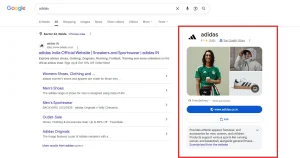
Image Source: Screenshot taken from Google SERP.
What Is Entity SEO? Why It Is Not Just About Keywords
To understand entity SEO, you first need to understand what Google means by an entity.
An entity is any person, place, organisation, concept, or thing that is unique and distinguishable from everything else. Your brand is an entity. A city is an entity. A historical figure, a product category, a scientific concept are all entities. What makes something an entity is not a name. It is the meaning, attributes, and relationships that surround it.
Google does not read your content the way a human reads a newspaper. It maps meaning. It identifies entities, recognises their attributes, and connects them to related entities in a vast web of knowledge. That web is called the Knowledge Graph.
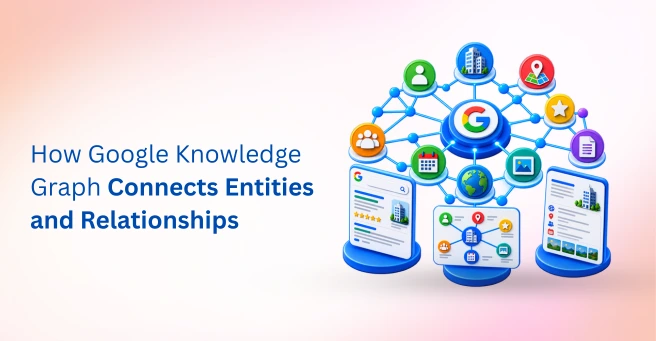
How Google’s Knowledge Graph Connects Entities
The Knowledge Graph is Google’s internal database of real-world entities and their relationships. Launched in 2012, it changed how search worked forever. Before it, Google matched keywords. After it, Google understood topics.
When Google sees your brand name mentioned alongside industry terms, experts, and trusted publications, it begins to build a picture. It maps your brand entity to a category, to people, to locations, and to related concepts. The richer that map becomes, the stronger your entity authority grows.
That entity data powers the Knowledge Panel, the information box that appears on the right-hand side of search results when you search for a brand, person, or concept. Getting a Knowledge Panel for your brand is a visible sign that Google recognises you as a confirmed entity. It is also one of the strongest trust signals you can earn.
Why Entity SEO Matters More Than Ever
Search has changed fundamentally. Google’s core algorithms, Hummingbird, BERT, and MUM are all built on semantic understanding. They do not look for keywords. They look for meaning, intent, and entity relationships.
The rise of AI search has accelerated this shift. Google’s AI Overviews, ChatGPT, Gemini, and other generative platforms pull information from entity graphs when constructing their responses. If your brand is not recognised as an entity, it will not appear in those AI citations. It is that straightforward.
Keyword SEO vs. Entity SEO: A Direct Comparison
Understanding the difference between traditional keyword SEO and entity based seo is key to shaping your modern search strategy.
| Factor | Keyword SEO | Entity SEO |
|---|---|---|
| Focus | Keywords | Entities & relationships |
| Ranking Signal | Content optimization | Authority & trust |
| User Intent | Query matching | Context understanding |
| AI Visibility | Low | High |
| Knowledge Panel Eligibility | No | Yes |
| Long-Term Sustainability | Moderate | High |
As the comparison shows, entity SEO does not replace keyword research. It builds a deeper layer of authority underneath it. When Google understands your entity, your keyword rankings follow naturally because you own the topic, not just the phrase.
The Role of E-E-A-T in Building Entity Authority
Google’s E-E-A-T framework – Experience, Expertise, Authoritativeness, and Trustworthiness, directly shapes how your entity is evaluated in search.
Experience and expertise tell Google that your content is produced by people with genuine knowledge. Authoritativeness is built through brand mentions, digital PR coverage, and citations on trusted external platforms. Trustworthiness is confirmed through consistent structured data, verified business profiles, and secure, accurate information.
Together, these E-E-A-T signals contribute to your entity’s credibility score in the Knowledge Graph. The stronger your trust signals, the more confidently Google connects your entity to the topics you cover.
How Google Understands Entity Relationships
Google does not evaluate your brand in isolation. It evaluates your entity in context, based on the topics you cover, the brands you associate with, and the relationships your content establishes.
Co-Occurrence, Topical Authority, and Content Relationships
Co-occurrence is a powerful concept in entity recognition. When your brand name consistently appears alongside specific industry terms, across your own site, social platforms, and external publications – Google infers a relationship. Your entity becomes associated with those concepts.
This is why topical authority matters. A brand that publishes one blog about SEO is a keyword-based website. A brand that consistently covers technical SEO, content strategy, schema markup, semantic SEO, and AI search visibility becomes a recognised authority entity in the SEO space. Google maps those content relationships and rewards them with broader topic ownership.
Your internal linking structure mirrors this logic. When you link related blog posts together, you are creating a content relationship map that crawlers use to understand entity proximity. A pillar page on SEO strategy that links to cluster posts on schema markup, E-E-A-T, and crawl budget signals to Google that your brand entity covers the entire topic domain.
Structured Data and Schema Markup: Speaking Google’s Language
Schema markup is how you translate your entity’s identity into machine-readable data. It is the most direct signal you can send to Google about who you are.
| Schema Type | Purpose in Entity SEO |
|---|---|
| Organization | Defines brand identity |
| Person | Defines authors and experts |
| LocalBusiness | Establishes local entity signals |
| Article | Connects content to entity |
| FAQPage | Enhances SERP visibility |
| BreadcrumbList | Clarifies site structure |
This cross-platform consistency is critical. When Google sees your brand name, logo, and description appearing identically across trusted sources, it builds confidence in your entity data. Structured data does not guarantee a knowledge panel. But it significantly increases the probability of entity recognition and rich result eligibility.
How to Build and Strengthen Your Entity in Google’s Eyes
Understanding what is entity seo is one thing. Applying it is another. Here are the five core actions that build lasting entity authority.
Step 1:- Claim and Optimise Your Knowledge Panel
Search your brand name on Google. If a knowledge panel appears, claim it via the ‘Claim this knowledge panel’ option in Search. If it does not appear yet, that is your first priority.
Complete your Google Business Profile with accurate, consistent information. Ensure your brand name, address, phone number, website URL, and category are identical across every platform. Consistency is the foundation of entity recognition.
Step 2:- Earn Brand Mentions and Digital PR Coverage
Brand mentions even unlinked ones are strong entity signals. When authoritative publications name your brand in the context of your industry, Google registers the association and strengthens your entity’s co-occurrence profile.
Target digital PR placements on industry publications, news sites, and niche directories. Use journalist outreach platforms to earn thought leadership coverage. Each mention adds another data point to your entity’s authority graph.
Remember: authority signals accumulate over time. A single press mention is useful. Consistent coverage across trusted domains is transformative.
Step 3:- Implement Schema Markup Across Your Site
Add Organisation schema to your homepage with your full sameAs array linking to every major profile LinkedIn, Twitter/X, Facebook, Wikipedia, Wikidata, and Crunchbase if applicable.
Apply Article schema to every blog post. Include the author’s name and credentials to reinforce E-E-A-T at the content level. Add FAQPage schema to FAQ sections like this one to increase your eligibility for rich results and AI citation inclusion.
Validate all schema with Google’s Rich Results Test after implementation. Fix any errors before publishing.
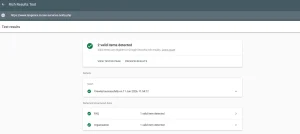
Image Source: Screenshot taken from Google’s Rich Results Test.
Step 4:- Build Topical Authority Through Content Clusters
Map your core entity topics and build a pillar-cluster content architecture around each one. Your pillar page covers the broad topic. Cluster posts go deep on sub-entities: specific techniques, tools, use cases, and questions.
Cross-link clusters back to the pillar. This mirrors the entity relationship structure that Google’s semantic search engine is designed to reward. Over time, your brand becomes the entity Google associates with that entire topic domain, not just individual keywords within it.
Step 5:- Build Visibility in AI Search and Generative Results
AI search models – Google’s AI Overviews, Gemini, and ChatGPT, pull from entity graphs and well-structured content. To increase your chances of appearing in AI citations, write in clear, direct formats. Define terms. Use structured lists. Answer questions explicitly.
Build your entity presence on platforms that AI models actively crawl: Wikipedia (if eligible), Reddit, Quora, LinkedIn, and major industry publications. The broader your entity footprint across trusted sources, the more likely an AI model will cite your brand as a trusted reference.
This is the core logic of generative engine optimization – the practice of structuring your entity and content to be AI-recommendation-ready, not just search-ranking-ready.
Measuring Entity SEO Performance
Entity SEO is a long-game strategy. Results build over months, not days. But there are clear indicators that tell you whether your entity authority is growing.
Track these metrics consistently:
| Metric | Why It Matters |
|---|---|
| Knowledge Panel Appearance | Confirms entity recognition |
| Branded Search Volume | Measures brand awareness |
| AI Overview Visibility | Tracks AI search presence |
| Topical Authority Score | Evaluates topic coverage |
| Brand Mentions | Measures entity growth |
| Schema Validation | Ensures structured data accuracy |
Use these metrics together to build a quarterly entity health report. Most brands see meaningful knowledge panel activity within 60 to 90 days of consistent entity signal building. AI citation inclusion can arrive sooner for brands already publishing structured, authoritative content.
Conclusion
Google no longer just reads pages. It understands entities, maps relationships, and builds a picture of which brands genuinely own their topics. The brands that win in search and in AI-generated results are the ones that have invested in entity authority, not just keyword rankings.
That means building a recognisable brand identity across trusted platforms. It means structured data that confirms your entity attributes. It means content clusters that signal topical authority. And it means E-E-A-T signals that tell both Google and AI models: this brand is credible, consistent, and worth citing.
Tangence India is a full-service digital marketing and SEO services agency helping brands build entity authority, structured data strategies, and topical content clusters that rank and get cited by AI.
Frequently Asked Questions
Q1. What is entity SEO and how does it differ from traditional SEO?
Entity SEO is the practice of building Google’s understanding of your brand as a real, credible, and connected entity in its Knowledge Graph. Traditional SEO targets keyword strings. Entity SEO targets meaning, relationships, and identity. The result is broader topical authority, Knowledge Panel visibility, and stronger performance in AI-generated search results.
Q2. What is a Knowledge Panel and how do I get one for my brand?
A Knowledge Panel is the rich information box that appears when Google recognises your brand as a confirmed entity. It is triggered by consistent brand mentions, a verified Google Business Profile, Wikipedia or Wikidata entries, and structured data with sameAs links. You can claim an existing panel via the ‘Claim this knowledge panel’ prompt in Google Search once your entity is recognised.
Q3. How does schema markup support entity SEO?
Schema markup gives Google machine-readable signals about your entity’s core attributes, your brand name, URL, logo, social profiles, and subject matter. Organisation schema with a full sameAs array is the most important starting point. Article and FAQPage schemas connect your content to specific entities and intent signals, increasing your eligibility for rich results and AI citations.
Q4. What role does E-E-A-T play in building entity authority?
E-E-A-T shapes how Google evaluates the credibility of your entity. Experience and expertise are demonstrated through author credentials and original insights. Authoritativeness is built through digital PR, brand mentions, and citations on trusted external platforms. Trustworthiness is confirmed through structured data, verified business information, and consistent entity signals across sources. Strong E-E-A-T means stronger entity recognition.
Q5. Can entity SEO improve my visibility in AI Overviews and ChatGPT results?
Yes. AI search models like Google’s AI Overviews, Gemini, and ChatGPT rely on entity graphs and structured content to build their responses. Brands with confirmed entity status, strong topical authority, and clearly formatted content are significantly more likely to receive AI citations. Generative engine optimization, the practice of structuring content and entity data for AI readability is the natural evolution of entity based seo.
Q6. How long does it take to see results from an entity SEO strategy?
Entity SEO results typically become visible within 3 to 6 months of consistent implementation. Knowledge Panel appearance often occurs within 60 to 90 days of building strong entity signals – brand mentions, verified profiles, and correct schema. AI citation inclusion can happen faster for brands already publishing structured, authoritative content on well-indexed platforms.
Q7. What are the best tools to build and track entity SEO?
Google Search Console is your primary tool, use it to track branded queries, AI Overview appearances, and schema validation. Semrush and Ahrefs offer topical authority scoring and brand mention tracking. Google’s Rich Results Test validates your schema markup. For dedicated entity mapping, tools like InLinks or WordLift help visualise content relationships and identify entity gaps in your coverage.