-01.svg)
-02.svg)
-03.svg)
-04.svg)
-05.svg)
-06.svg)
-07.svg)
-08.svg)
-09.svg)
-10.svg)
-11.svg)
-12.svg)
-13.svg)
-14.svg)






blog
What Is Hybrid Engine Optimization (HEO)? The New Way to Win Search
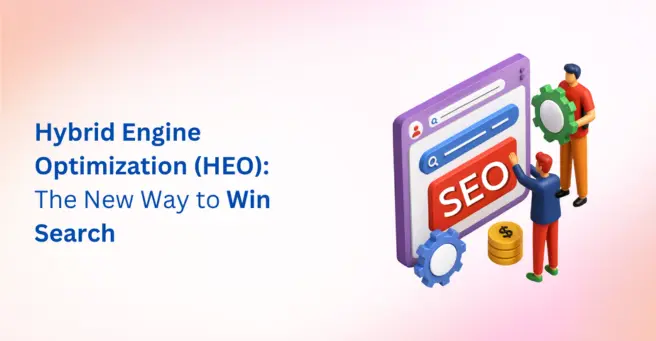
| Hybrid Engine Optimization (HEO) is a modern digital marketing strategy that optimizes content for both traditional search engines like Google and Bing and AI-powered discovery platforms like ChatGPT, Gemini, and Perplexity – simultaneously. It combines classic SEO techniques with AI search optimization, entity building, and structured content formatting to maximize brand visibility across every search channel. |
Search has changed and it has changed faster than most businesses realize. A few years ago, ranking on Google meant owning your digital visibility. Today, your potential customers are finding answers on ChatGPT, Gemini, Perplexity, and voice assistants, often without ever clicking a traditional search result.
This is where Hybrid Engine Optimization (HEO) comes in. It is a forward-thinking SEO strategy that optimizes your content for both traditional search engines and AI-powered discovery platforms at the same time.
Businesses that stick to old-school SEO alone are quietly losing ground. Brands that embrace HEO are building visibility that compounds across every major discovery channel.
In this complete guide, you will learn what Hybrid Engine Optimization is, why it matters, and exactly how to implement it – step by step.
What Is Hybrid Engine Optimization (HEO)?
Hybrid Engine Optimization (HEO) is the practice of optimizing your digital content to rank and appear across both traditional search engines like Google and Bing and AI-powered search and answer platforms, such as ChatGPT, Google Gemini, Perplexity AI, and voice search assistants, simultaneously.
Unlike classic SEO, which focuses primarily on keyword rankings in blue-link results, HEO takes a layered approach. It combines on-page SEO fundamentals, entity building, structured data, E-E-A-T signals, and conversational content formatting to make your brand visible wherever users are searching.
The term reflects a hybrid reality: search is no longer a single channel. It is a fragmented ecosystem of traditional SERPs, AI Overviews, chatbot answers, voice queries, and zero-click results, all happening at the same time. Mastering Hybrid Engine Optimization means mastering visibility across all of them.
Why Traditional SEO Is No Longer Enough
Traditional SEO was built for a world where Google dominated every search query. That world still exists but it now shares space with something much bigger. Google’s shift toward AI-powered results is evident in its generative search experience, where answers are displayed directly within the search interface.
Consider these shifts happening right now:
- Google AI Overviews now appear at the top of millions of search results. Users get their answers without clicking any link.
- ChatGPT reached over 100 million weekly users. Many of them use it as their primary research tool.
- Voice search queries are conversational and question-based, very different from typed keyword searches.
- Perplexity AI and similar answer engines are being adopted rapidly by tech-savvy and professional audiences.
This means your content must do more than rank. It must be structured, authoritative, and formatted in a way that AI systems can extract, trust, and cite.
Brands that ignore this shift are not just missing traffic, they are becoming invisible to an entirely new generation of search behavior. Hybrid Engine Optimization is the direct response to this reality.
What are the Core Pillars of Hybrid Engine Optimization
HEO is not a single tactic. It is a multi-layered framework built on five core pillars. Each one reinforces the others.
1. Traditional SEO Foundation
On-page SEO, technical SEO, and backlink building remain the non-negotiable base layer of any HEO strategy. Without strong fundamentals – fast page speed, clean site architecture, mobile optimization, and authoritative inbound links, no amount of AI-focused optimization will deliver lasting results. Even in a hybrid model, foundational practices outlined in Google’s SEO starter guide remain essential for long-term search performance.
2. AI Search Optimization (AEO)
Answer Engine Optimization (AEO) is a critical component of HEO. It focuses on structuring content so that AI models can extract concise, accurate answers directly from your pages. This means writing clear definition paragraphs, using FAQ schema, and answering questions in the first 2-3 sentences of each section.
3. E-E-A-T Signal Reinforcement
Both Google and AI language models reward content that demonstrates Experience, Expertise, Authoritativeness, and Trustworthiness. This means including detailed author bios, citing credible sources, showcasing real-world experience, and building a brand presence that is consistent and verifiable across the web.
4. Conversational and Semantic Content Strategy
AI models understand context, not just keywords. Writing for semantic SEO means covering a topic in depth, using natural language, incorporating long-tail conversational queries, and building topical authority through content clusters. This approach satisfies both human readers and AI content parsers at once.
5. Multi-Platform Visibility
HEO extends your visibility beyond the traditional SERP. Featured snippets, Google AI Overviews, Perplexity citations, voice search results, and knowledge panels are all legitimate discovery surfaces. Optimizing for all of them simultaneously is what makes Hybrid Engine Optimization a genuinely complete strategy.
HEO vs. Traditional SEO vs. AEO:- Key Differences
Understanding how Hybrid Engine Optimization differs from traditional SEO and standalone AEO helps clarify exactly why a hybrid approach delivers superior results.
| Factor | Traditional SEO | AEO (Answer Engine Optimization) | Hybrid Engine Optimization |
|---|---|---|---|
| Target Platform | Google, Bing | AI chatbots (ChatGPT, Gemini, Perplexity) | Search engines + AI platforms |
| Content Format | Long-form, keyword-focused blogs | Concise, direct answers | Layered content (answers + depth) |
| Keyword Strategy | Exact-match keywords | Conversational, question-based queries | Blend of both keyword types |
| Schema Usage | Basic structured data | FAQ & HowTo schema | Full schema implementation (FAQ, HowTo, Article, Organization) |
| Success Metrics | Rankings & organic traffic | AI citations & answer inclusion | Combined visibility (rankings + AI presence) |
As the table shows, neither traditional SEO nor AEO alone covers the full search landscape. Only Hybrid Engine Optimization addresses both channels, which is why it is becoming the standard for brands serious about sustainable visibility.
How Hybrid Engine Optimization Works:- Step by Step Process
Implementing Hybrid Engine Optimization is a structured process. Here is a practical, step-by-step framework to get started:
Step 1: Conduct Dual-Intent Keyword Research
Start by researching both traditional keyword queries and conversational AI-style questions. Use tools like Semrush, Ahrefs, and AlsoAsked to find how users phrase questions on both Google and AI platforms. Focus on question-based, long-tail keywords that reflect real user intent.
Step 2: Build Topical Authority Through Content Clusters
A single blog post is not enough. Create a pillar page for your core topic and support it with cluster content covering subtopics in depth. Strong internal linking across your cluster signals topical expertise to both Google crawlers and AI language models that index your domain.
Step 3: Establish Your Entity Presence
AI models do not just read pages, they recognize entities. Your brand, your authors, and your business must exist as verified, consistent entities across the web. This means claiming your Google Business Profile, maintaining consistent NAP (Name, Address, Phone) data, creating Wikidata or Wikipedia entries where appropriate, and ensuring your social media profiles reflect the same brand identity. Entity SEO and knowledge graph optimization are foundational to being cited by AI.
Step 4: Implement Structured Data (Schema Markup)
Deploy FAQ, HowTo, Article, and Organization schema markup across your content. Structured data gives AI systems a machine-readable layer to understand exactly what your content is about and to cite it accurately in AI-generated answers and rich results.
Step 5: Rewrite Your Content with HEO Formatting
Audit your existing content and reformat it for hybrid discovery. Add a direct answer paragraph at the very top of each section, this inverted pyramid approach ensures AI models can extract your answer immediately. Use short sentences (under 20 words), clear H2 and H3 hierarchies, and bold key takeaways throughout. AI-friendly content formatting is not about dumbing content down, it is about making expertise instantly accessible.
Step 6: Write for Both Crawlers and LLM Training Signals
Balance keyword optimization with rich, context-driven language. Google crawlers and large language models both reward content that demonstrates depth, consistency, and semantic relevance. Avoid keyword stuffing and instead focus on covering your topic more comprehensively than any competing page.
Step 7: Optimize for Voice Search Readability
Voice queries are conversational and question-based. Use natural language, include question-format subheadings (Who, What, How, Why), and write concise answers that can be read aloud clearly. Aim for a Flesch Reading Ease score above 60 for maximum voice and AI compatibility.
Step 8: Monitor HEO Performance
Track Google rankings and organic traffic using Google Search Console and Semrush. In parallel, manually monitor AI citation presence, search for your target topics on ChatGPT, Perplexity, and Gemini to see if your brand or content is being cited. Measuring HEO performance requires a blended dashboard that covers both channels.
Tools to Help You Execute HEO Effectively
The right tool stack makes implementing a Hybrid Engine Optimization strategy significantly more manageable. Here are the key tools for each layer:
| Tool | Purpose |
|---|---|
| Google Search Console | Track SEO performance |
| Semrush / Ahrefs | Keyword & backlink research |
| Schema Validator | Validate structured data |
| Surfer SEO | Content optimization |
| Yoast SEO | On-page SEO |
| ChatGPT / Perplexity | AI visibility checks |
| AlsoAsked | Question research |
Best Practices for Hybrid Engine Optimization
Applying Hybrid Engine Optimization effectively requires consistent habits across your entire content operation. Here are the best practices to embed into your workflow:
- Lead with the answer. Open every section with a direct 1-2 sentence answer before expanding. AI models extract first-paragraph responses most reliably.
- Use structured heading hierarchies. Clear H2 and H3 organization helps both Google crawlers and AI systems parse your content accurately.
- Build topical clusters, not isolated posts. A single well-optimized page is weaker than a network of ten interconnected, expert pages on the same topic.
- Earn both backlinks and brand mentions. Unlinked brand citations matter to AI language models even when they carry no PageRank value. Pursue both actively.
- Keep sentences under 20 words. Short sentences improve Flesch readability scores, voice search compatibility, and AI extraction accuracy simultaneously.
- Refresh content on a rolling schedule. AI models have recency preferences. Outdated content loses citation authority over time.
- Optimize for featured snippets. Winning a featured snippet is one of the strongest signals that your content will also be cited in AI Overviews and chatbot answers.
Common Mistakes to Avoid in Hybrid Engine Optimization
Even well-intentioned SEO teams make critical errors when transitioning to an HEO approach. Avoid these common pitfalls:
| Mistake | Consequence |
|---|---|
| Ignoring AI platforms | Loss of future traffic |
| Keyword stuffing | Poor AI understanding |
| No structured data | Missed rich results |
| Writing only for bots | Low engagement |
| Weak E-E-A-T | Low trust signals |
| No entity building | Invisible to AI |
Final Thoughts
Search has never been more fragmented or more full of opportunity. Hybrid Engine Optimization is not a trend to watch. It is the new standard for any brand that wants to remain visible in a world where Google, AI chatbots, voice assistants, and answer engines all compete for your audience’s attention simultaneously.
The good news: you do not have to navigate this shift alone.
Tangence is a full-service digital marketing and SEO agency that helps brands build future-ready search strategies. From technical SEO audits and AI-optimized content creation to entity building, structured data implementation, and performance tracking across both traditional and AI-powered search platforms, Tangence offers end-to-end SEO services designed to maximize your brand’s visibility wherever your customers are searching.
If you are ready to move beyond traditional SEO and build a Hybrid Engine Optimization strategy that compounds over time, Tangence is the partner to get you there.
Frequently Asked Questions
1: What is Hybrid Engine Optimization in simple terms?
Hybrid Engine Optimization (HEO) is an SEO strategy that optimizes your content to appear in both traditional Google search results and AI-powered platforms like ChatGPT, Gemini, and Perplexity at the same time. It combines classic SEO techniques with AI search optimization, structured data, and entity building to maximize visibility across every modern discovery channel.
2: How is Hybrid Engine Optimization different from traditional SEO?
Traditional SEO focuses on ranking in Google and Bing search results through keywords, backlinks, and on-page optimization. Hybrid Engine Optimization extends this foundation to also optimize for AI chatbots, voice search, and answer engines. It adds layers like entity presence, semantic content formatting, and structured data that classic SEO alone does not fully address.
3: Does HEO help with Google rankings too?
Yes, absolutely. Hybrid Engine Optimization is built on a strong traditional SEO foundation. In fact, many HEO best practices including E-E-A-T content, structured data, topical authority, and readability optimization, directly improve Google rankings. HEO does not replace SEO; it expands and strengthens it.
4: What types of businesses need Hybrid Engine Optimization?
Every business with an online presence can benefit from HEO, but it is especially valuable for B2B brands, service businesses, healthcare providers, educational institutions, and e-commerce stores, any brand where customers research before purchasing. If your customers use Google or AI tools to find information, HEO is relevant to you.
5: How long does it take to see results from HEO?
Results vary based on your domain authority, content volume, and competitive landscape. For traditional SEO components, most brands see measurable ranking improvements within 3 to 6 months. AI citation presence can build faster sometimes within weeks once structured data and entity signals are properly in place. HEO is a long-term investment, but early signals appear sooner than many expect.
6: Is Hybrid Engine Optimization relevant for small businesses?
Yes. Small businesses can benefit significantly from HEO, particularly through local SEO, Google Business Profile optimization, and structured data implementation all of which are core components of a hybrid strategy. For small businesses, entity presence and local citation building are especially high-value starting points that do not require large content budgets.
7: What is the role of structured data in HEO?
Structured data is the machine-readable layer that helps AI systems and search engines understand exactly what your content is about. FAQ schema, HowTo schema, Article schema, and Organization schema all improve your chances of appearing in rich results, AI Overviews, and chatbot-cited answers. In Hybrid Engine Optimization, structured data is not optional, it is a core technical requirement.