-01.svg) SEO Services
SEO Services-02.svg) Local SEO Services
Local SEO Services-03.svg) AI SEO Services
AI SEO Services-04.svg) Technical SEO Services
Technical SEO Services-05.svg) Performance Marketing
Performance Marketing-06.svg) Social Media
Social Media-07.svg) Content Marketing
Content Marketing-08.svg) Web Development
Web Development-09.svg) App Development
App Development-10.svg) Marketing Automation
Marketing Automation-11.svg) Real Estate
Real Estate-12.svg) Ecommerce
Ecommerce-13.svg) Education
Education-14.svg) Healthcare
Healthcare B2B
B2B SAAS
SAAS Law Firm
 BFSI
BFSI Renewable Energy
 Tour and Travel
blog
How AI Assistants Are Changing Voice Search Optimization in 2026
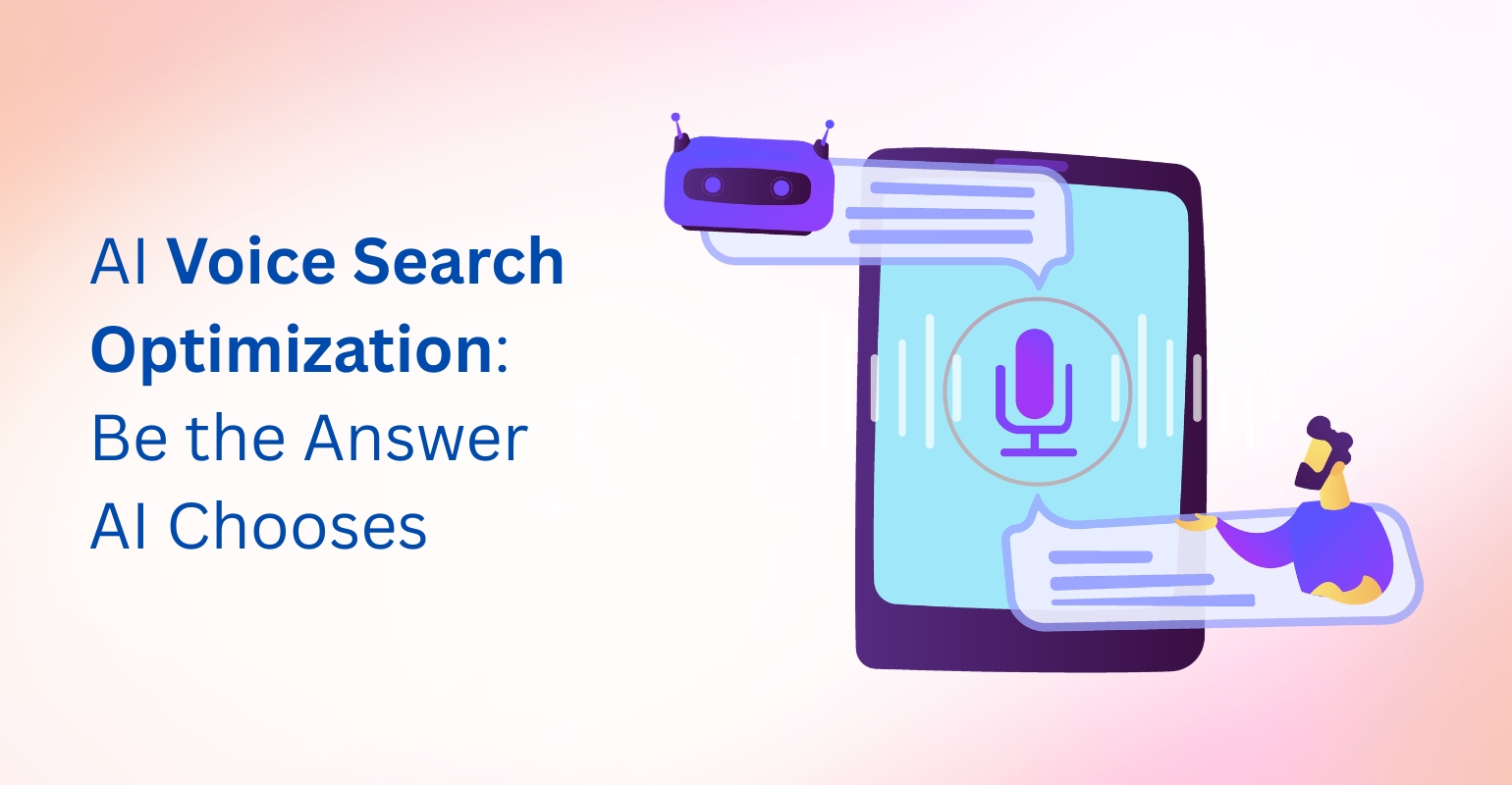
People no longer type into search boxes the way they used to. They speak. They ask questions out loud to their phones, smart speakers, car dashboards, and wearables. Voice search is no longer a novelty feature. It is a dominant search behaviour.
The numbers make this impossible to ignore. There are 8.4 billion voice assistants in use globally more than the world’s population. 27% of all search queries are now voice-initiated. 50% of US adults use voice search every single day. These are not projections. They are the reality of 2026.
But here is what most SEO guides miss: voice search has been fundamentally transformed by artificial intelligence. The assistants handling these queries are no longer simple keyword-matching engines. They are large language models, the same AI technology powering ChatGPT and Google’s AI Overviews. They understand intent, context, and nuance and give one spoken answer, not a list of blue links.
That shift changes everything about how you optimise. AI voice search optimization is now one of the most critical SEO skills you can develop. It requires a completely different content strategy, a different technical foundation, and a different understanding of how search engines choose what to say aloud.
| AI Voice Search Optimization |
|---|
| AI voice search optimization is the process of structuring content so AI assistants can extract, understand, and deliver it as a single spoken answer to user queries. |
This guide covers all of it. You will learn how AI assistants select answers, which seven strategies work best in 2026, how to optimise for Google, Siri, Alexa, and ChatGPT Search separately, and how to measure whether your efforts are working. Let us get into it.
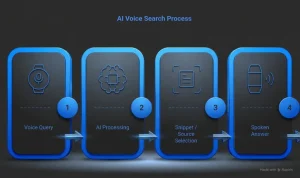
Image Source: Created using Napkin AI.
What Has Changed: AI Assistants vs Old Voice Search
To optimise effectively, you need to understand the gap between old voice search and what exists today. These are two fundamentally different technologies.
Old Voice Search (Pre-2023)
Early voice search was built on keyword matching. The assistant listened, transcribed your words, then ran a standard search. It returned the top result from the existing index. The answer was often read verbatim from the featured snippet. It handled simple commands well. It struggled with anything conversational, contextual, or multi-step.
- Matched spoken words to indexed text, no deep intent understanding
- Handled single-intent commands: set a timer, call a contact, play a song
- Returned one result, usually read directly from a featured snippet
- Could not follow up, clarify, or remember context from earlier in a conversation
AI-Powered Voice Search (2026)
Today’s voice assistants are powered by large language models (LLMs). They do not just match keywords. They model meaning and understand that “what is a good coffee near me open now” is a local transactional query with a time constraint. AI powered voice search understand follow-up questions and personalise responses based on your history and location.
- Understands natural language, idioms, and implied meaning – not just literal keywords
- Handles multi-turn conversations and remembers context within a session
- Integrated with Google AI Overviews, synthesises answers from multiple sources
- Embedded across ecosystems: cars, wearables, smart appliances, browsers
- Personalises results using location data, search history, and device context
| Key Shift |
|---|
| The single biggest change in 2026: AI voice assistants no longer just retrieve an answer, they construct one. Your content must be structured so AI can extract, understand, and confidently read it aloud as a single spoken response. |
How AI Assistants Decide What to Read Aloud
Voice assistants do not browse a list of ten results and pick the best one. They select a single answer. Understanding how that selection happens is the foundation of effective AI voice search optimization.
The Voice Result Pipeline
When a user asks a voice query, the AI assistant runs the query through its model. It identifies the most likely answer source. That source is almost always one of two things: a featured snippet or an AI Overview citation. The page providing the answer is not necessarily ranked number one. But it meets a specific set of signals that make it machine-readable and trustworthy.
- Voice answers come almost exclusively from featured snippets or AI Overview citations
- Pages loading above 2 seconds are routinely excluded, speed is a hard threshold
- Mobile-friendliness is non-negotiable, most voice queries happen on mobile devices
- The AI reads one answer aloud, there is no second place in voice search.
Signals AI Uses to Select an Answer
AI assistants evaluate content using a layered set of signals. These go beyond traditional SEO ranking factors. Here is what matters most in 2026:
- E-E-A-T signals: first-hand experience, author credentials, and accurate sourcing all increase selection probability
- Answer clarity: a direct 40–50 word response immediately below a question-phrased heading scores highest
- Structured data: schema markup gives AI crawlers machine-readable context about what your content is
- Topical authority: sites consistently covering a topic in depth earn stronger voice visibility over time
- Conversational match: content written as natural speech performs better than dense keyword-optimised text
- Page speed and Core Web Vitals: LCP under 2.5 seconds and strong INP scores are technical baseline requirements
AI Assistants Compared: Google, Siri, Alexa & ChatGPT
Not all voice assistants work the same way. Each pulls from different data sources and responds to different optimisation signals. Here is what you need to know for each platform.
| Platform | Data Sources | Key Optimization Factors | Best Use Cases |
|---|---|---|---|
| Google Assistant | Google Index + AI Overviews | FAQPage Schema, Featured Snippets, E-E-A-T | All query types |
| Apple Siri | Bing + Apple Maps | FAQPage Schema, Bing SEO Optimization | Local & informational searches |
| Amazon Alexa | Bing + Knowledge Graph | Bing Webmaster Tools, Product Schema | Smart home & voice commerce |
| ChatGPT Search | Trained AI Model + Web Citations | E-E-A-T Signals, Authoritative Sources | Informational & research queries |
7 AI Voice Search Optimization Strategies for 2026
Now that you understand how AI assistants select answers, here are seven proven strategies for AI voice search optimization. Apply these together for the strongest results.
Strategy 1: Target Conversational, Question-Based Keywords
Voice queries are structurally different from typed searches. A typed search might be “best coffee London.” A voice search is “Where can I find a good flat white near me right now?” Voice queries average 7–10 words. They are full questions, not keyword fragments.
- Use AnswerThePublic to find the exact question phrasing people use for your topic
- Mine Google’s People Also Ask boxes, these are voice query gold
- Target who, what, where, when, why, and how questions for every major page
- Avoid short, fragment-style keywords as primary targets for voice-optimised pages
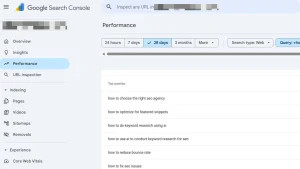
Image Source: Screenshot taken from Google Search Console.
Strategy 2: Optimise for Featured Snippets (Position Zero)
Voice assistants read featured snippets. This is not a theory, it is the documented mechanism for how Google Assistant delivers voice answers. Winning the snippet means winning the voice result.
- Place the question as an H2 or H3 heading, exactly as users would ask it
- Follow with a 40–50 word answer paragraph immediately below the heading
- Use definition blocks for “what is” queries and numbered steps for “how to” queries
- Tables work well for comparison queries, they often earn snippet placement
- Pages ranking positions 1–5 for a question query have the highest snippet win rate
Strategy 3: Implement Schema Markup for Voice Eligibility
Schema markup is structured data that tells AI crawlers exactly what your content is and what it means. It does not guarantee a voice result. But without it, you are invisible to the machine-reading layer that selects voice answers.
Three schema types matter most for AI voice search optimization in 2026:
- FAQPage schema: mark up every question-and-answer pair on your page, this is the highest-impact voice schema
- SpeakableSpecification schema: explicitly flags sections of your page as suitable for text-to-speech readback
- LocalBusiness schema: ensures AI assistants surface accurate name, address, and phone data for local queries
- HowTo schema: marks step-by-step content, commonly read aloud for task-based voice queries
Strategy 4: Build an AI-Optimised FAQ Section
FAQ sections are the single best on-page format for AI voice search optimization. They are built around questions. The answers are self-contained. They map perfectly to the way AI assistants construct spoken responses.
- Write every question exactly as a user would speak it, full sentence, natural phrasing
- Keep answers between 40–60 words, short enough to read aloud without editing
- Start each answer with a direct response, do not open with caveats or context
- Add FAQPage schema markup to every question-and-answer pair on the page
- Update FAQ content quarterly using new People Also Ask data and GSC query reports
Strategy 5: Prioritise Local SEO for Voice
Seventy-six percent of voice searches carry local intent. “Near me” is the most dominant modifier in voice search. If you run a local business, local voice search optimisation is not optional, it is your highest-leverage SEO activity.
AI assistants rely heavily on structured local data to answer these queries. If your data is incomplete or inconsistent, the assistant cannot confidently surface your business.
- Keep your Google Business Profile fully updated: hours, address, phone, services, photos
- Maintain consistent NAP (name, address, phone) data across all online directories
- Add LocalBusiness schema to your website with accurate, matching contact data
- Create local landing pages with conversational content targeting nearby intent queries
- Earn positive reviews, AI assistants weight review signals for local voice results
Strategy 6: Meet the Technical Speed Threshold
Page speed is a binary filter for voice search. Pages loading above 2 seconds are routinely excluded from voice results, regardless of content quality. You can have the perfect answer on your page. If it loads slowly, the assistant will not use it.
- Target LCP (Largest Contentful Paint) under 2.5 seconds, under 2.0 seconds for voice safety
- Optimise INP (Interaction to Next Paint), Google’s replacement for FID as of 2024
- Compress and next-gen format all images: use WebP or AVIF instead of JPEG/PNG
- Use a Content Delivery Network (CDN) for consistent speed across geographic locations
- Test weekly with Google PageSpeed Insights, prioritise mobile scores over desktop
| Technical Baseline |
|---|
| Run a Core Web Vitals report in Google Search Console monthly. Filter by mobile. Any page showing “Poor” LCP or INP scores is ineligible for voice results until fixed. Start with your highest-traffic pages. |
Strategy 7: Write in Conversational, Natural Language
AI assistants favour content that sounds natural when spoken aloud. Dense, jargon-heavy writing does not earn voice results, even if it ranks well in traditional search. The content needs to pass what you might call a “read-aloud test.”
- Write at a Grade 8–9 reading level: short sentences, plain vocabulary, active voice
- Use second-person (“you”) to create the conversational register AI assistants prefer
- Keep sentences under 20 words, this also satisfies Yoast readability requirements
- Avoid nominalisations: say “we improve” not “we drive improvement”
- Use contractions naturally: “it is” becomes “it’s” in spoken answers
How to Measure Voice Search Performance
Most voice search guides skip this section. That is a mistake. If you cannot measure voice performance, you cannot improve it. Here are the best tools and methods for tracking your results in 2026.
| Tool / Method | What to Do | Key Insight | Action Step |
|---|---|---|---|
| Google Search Console (GSC) | Filter Performance report by question-based queries like “how,” “what,” “where,” “why,” “best,” “near me” | High impressions + low CTR = likely appearing in voice results | Optimize content for better brand recall and engagement |
| Featured Snippet Tracking (Semrush) | Use Position Tracking and enable Featured Snippet filter | Each featured snippet = potential voice result | Track weekly gains/losses and protect snippet rankings |
| Zero-Click Impression Monitoring | Identify queries with very high impressions but low clicks in GSC | Indicates users are getting answers directly via voice/snippets | Strengthen branding and content hooks instead of removing snippets |
| Google Business Profile Insights | Monitor “discovery” searches in GBP Insights | High discovery searches = strong local voice visibility | Improve local SEO, reviews, and profile completeness |
| Core Web Vitals Report (GSC) | Check mobile performance for LCP and INP issues | Poor speed = ineligible for voice results | Fix technical issues on high-impression pages first |
Conclusion
Voice search is no longer an emerging trend. It is already shaping how people search, ask questions, and discover businesses online. In 2026, AI voice search optimization is about making your content clear, structured, and easy for assistants to understand and read aloud. That means using conversational language, targeting question-based queries, adding FAQ and schema markup, improving page speed, and strengthening local SEO signals.
Implementing AI voice search optimization across an entire website, schema markup, content restructuring, Core Web Vitals fixes, local SEO, and featured snippet strategy is a significant undertaking. Tangence makes it straightforward.
We offer end-to-end SEO services built for 2026 search, technical audits that surface every voice search gap across your domain, schema implementation, content strategy designed around AI readability, local SEO, and link building that builds lasting organic authority.
Frequently Asked Questions
Q1. What is AI voice search optimization?
AI voice search optimization means structuring content so AI assistants can select and read it aloud as a direct answer. It focuses on clarity, conversational language, structured formatting, and strong technical SEO signals.
Q2. How is voice search different from regular SEO?
Voice search uses longer, conversational queries and delivers a single spoken answer instead of multiple results. AI prioritizes clarity, intent, and structure over traditional ranking factors.
Q3. Which AI assistant should you optimize for first?
Google Assistant is the top priority due to its dominance. However, Siri, Alexa, and ChatGPT Search also matter, so optimizing across platforms ensures broader visibility.
Q4. Does schema markup help with voice search?
Yes, schema like FAQPage and Speakable helps AI understand and extract content easily, increasing your chances of being selected as a spoken answer.
Q5. How fast should your website be?
Pages should load within two seconds with strong Core Web Vitals. Faster sites are more likely to be used by voice assistants.
Q6. Is local SEO important for voice search?
Yes, most voice queries have local intent. Optimizing your business profile and targeting location-based queries improves visibility.
Q7. How do you track voice search performance?
Use Google Search Console and track featured snippets. High impressions with low clicks often indicate voice search visibility.