
blog
SEO Content Creation in 2026: Step-by-Step Guide to Rank #1 on Google

Search engines have evolved dramatically over the past decade. In 2026, ranking on Google requires far more than simply inserting keywords into a blog post. Today, SEO content creation is a strategic process that combines search intent analysis, topical authority, user experience, and high-quality writing aligned with Google’s EEAT principles – Experience, Expertise, Authoritativeness, and Trustworthiness.
Many businesses publish content regularly but struggle to gain organic traffic because their articles lack depth, structure, or relevance to user intent. Google’s algorithms now prioritize helpful, well-structured, and authoritative content that answers users’ questions comprehensively.
At the same time, the rise of AI-generated content has created an overwhelming amount of information online. As a result, search engines have become better at identifying content that genuinely helps users versus content created purely for ranking purposes.
To succeed today, businesses must adopt a strategic approach to SEO content creation that focuses on quality, topical authority, and meaningful user engagement.
In this guide, we will walk through a step-by-step framework for creating SEO-optimized content that actually ranks in 2026. From keyword research and content structuring to advanced optimization strategies, you’ll learn how to produce content that drives sustainable organic traffic.

Image Source: Created using Napkin AI.
What Is SEO Content Creation?
SEO content creation refers to the process of planning, writing, optimizing, and publishing content designed to rank in search engines while delivering value to readers.
The goal is not only to appear in search results but also to provide the most helpful answer to a user’s query.
SEO content can take many forms, including:
- Blog posts
- Educational guides
- Tutorials
- Landing pages
- Case studies
- Product descriptions
- Industry research reports
Each type of content serves a specific purpose in a broader organic search content strategy.
Why SEO Content Matters
Search engines rely heavily on content to understand what your website is about. High-quality content helps search engines determine:
- The relevance of your website to certain topics
- The authority of your brand in your industry
- Whether your page satisfies user intent
When done correctly, SEO content creation can drive consistent organic traffic, increase brand credibility, and generate qualified leads over the long term.
Key Elements of Effective SEO Content
Successful search engine optimized content typically includes:
- Intent-focused keyword research
- Structured headings and formatting
- Semantic keyword integration
- Internal and external linking
- Optimized metadata
- Strong readability and engagement
When these elements work together, your content becomes easier for both users and search engines to understand.
Why SEO Content Creation Is More Important Than Ever
The importance of SEO content creation has grown significantly due to changes in search technology and user behavior.
Google’s Helpful Content Updates
Recent algorithm updates emphasize content written for people rather than search engines. Pages that provide genuine insights, practical solutions, and detailed explanations tend to perform better.
Content Saturation
Every day, millions of new blog posts are published online. Without a strong content optimization strategy, it’s easy for articles to get lost in search results.
To stand out, content must demonstrate:
- Original insights
- Topic expertise
- Clear search intent alignment
The Rise of AI Content
AI tools have made content creation faster, but they have also increased competition. Search engines now prioritize content that shows real expertise and meaningful value, not just automated text generation. Many marketers also wonder whether AI-generated content can rank on Google, especially with the growing use of AI writing tools in content marketing.
Benefits of High-Quality SEO Content
Investing in a strong SEO content creation strategy can deliver several long-term advantages:
- Higher organic traffic
- Improved domain authority
- Stronger brand visibility
- Increased lead generation
- Better user engagement
In essence, high-quality content becomes a long-term asset that continues attracting visitors over time.
Step-by-Step SEO Content Creation Process
Creating content that ranks requires a structured workflow. Below is a proven framework for modern SEO content creation.
Step 1: Conduct Intent-Based Keyword Research
Keyword research is the foundation of any successful content strategy. However, in 2026 it’s not just about finding high-volume keywords – it’s about understanding search intent.
Google SERP analysis for the keyword “SEO content creation” showing AI overview, top-ranking results, and People Also Ask questions.
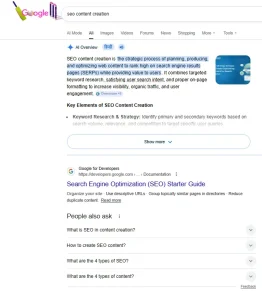
Image Source:Screenshot from Google Search results.
Search intent refers to the reason behind a user’s search query.
The four main types include:
- Informational: Users looking for knowledge
- Navigational: Users searching for a specific website
- Transactional: Users ready to purchase
- Commercial: Users comparing products or services
For blog content, informational intent is usually the primary focus.
Useful tools for keyword research include:
- Ahrefs
- SEMrush
- Google Keyword Planner
- Google Search Console
- AnswerThePublic
These tools help identify long-tail keywords such as:
- how to create SEO optimized content
- SEO content writing tips
- content optimization for Google ranking
Targeting these phrases allows you to capture more specific search queries.
Step 2: Build a Topical Content Structure
Instead of publishing isolated blog posts, modern SEO strategies focus on topic clusters.
A topic cluster organizes content around a central subject known as a pillar topic.
For example:
Pillar topic: SEO content creation
Supporting articles might include:
- keyword research for SEO content
- on-page SEO for blog posts
- SEO writing techniques
- content optimization checklist
This structure helps search engines recognize your site as an authority on a particular subject.
It also improves internal linking and user navigation.
Step 3: Create a Detailed Content Outline
Before writing, a detailed outline ensures that your article covers the topic thoroughly.
An effective outline typically includes:
- A clear H1 title
- Several H2 sections covering key subtopics
- Supporting H3 headings for deeper explanations
- Opportunities to include FAQs and structured data
This planning stage improves both readability and topical coverage, which are essential for successful SEO content creation.
Step 4: Write Content That Demonstrates EEAT
Google increasingly prioritizes content that demonstrates Experience, Expertise, Authoritativeness, and Trustworthiness.
To strengthen EEAT signals, your content should:
- Provide practical insights or real examples
- Include credible sources or statistics
- Offer detailed explanations
- Address user questions clearly
Avoid producing shallow articles that simply repeat information from other websites.
Instead, focus on delivering unique perspectives and actionable advice.
Step 5: Optimize Content for On-Page SEO
Once the content is written, it must be optimized for search engines.
Important on-page SEO elements include:
| SEO Element | Best Practice | Why It Matters |
|---|---|---|
| Title Tag | Include primary keyword | Improves rankings and CTR |
| Meta Description | Write compelling summaries | Increases click-through rate |
| Headings | Use structured H1, H2, H3 | Improves readability |
| Internal Links | Link relevant pages | Builds topical authority |
| Image Alt Text | Describe images with keywords | Helps image SEO |
Best practices for optimization include:
- Using the focus keyword in the title
- Placing the keyword in the introduction
- Integrating related terms naturally
- Avoiding keyword stuffing
Proper optimization ensures your SEO content creation efforts translate into higher search visibility.
Step 6: Improve Content Readability
Content readability significantly impacts user engagement.
Readers prefer articles that are easy to scan and understand.
You can improve readability by:
- Using short paragraphs
- Adding bullet points
- Including subheadings
- Breaking complex ideas into simple explanations
Tools such as Yoast SEO, Grammarly, and Hemingway Editor can help improve readability scores.
Better readability often leads to longer session durations and improved rankings.
Step 7: Add Internal and External Links
Internal linking plays an important role in SEO.
By linking to related pages within your website, you help search engines understand the structure of your content.
Benefits of internal linking include:
- Improved crawlability
- Stronger topical authority
- Better user navigation
External links are also valuable when referencing credible sources or research.
Together, these linking strategies strengthen your overall SEO content creation framework.
Advanced SEO Content Creation Strategies for 2026
Basic optimization alone is no longer enough to compete in search results. Advanced techniques can significantly improve your chances of ranking.
Use Semantic SEO
Search engines now understand the relationships between words and topics.
Instead of repeating the same keyword, incorporate semantic keywords and related terms.
Examples include:
- search intent optimization
- semantic keyword strategy
- content marketing SEO
To improve contextual relevance, marketers should understand how LSI keywords work in modern SEO strategies, as they help search engines interpret the meaning behind your content.
Optimize for Featured Snippets
Featured snippets often appear at the top of search results.
To increase your chances of appearing there:
- Answer questions clearly
- Use bullet lists or numbered steps
- Provide concise definitions
This increases visibility and click-through rates.
Optimize for AI Search and SGE
Google’s Search Generative Experience (SGE) and AI-driven search features rely on content that is well structured and authoritative.
To adapt to these changes:
- Write clear, factual answers
- Structure content logically
- Use schema markup where possible
These strategies improve the chances that your content will be referenced in AI-powered search results.
SEO Content Optimization Checklist
Before publishing any article, review the following checklist.
A well-executed SEO content creation process should include:
| Optimization Factor | Status Check |
|---|---|
| Focus keyword in title | ✔ |
| Keyword in introduction | ✔ |
| Semantic keywords added | ✔ |
| Internal links included | ✔ |
| Images optimized | ✔ |
| Meta description written | ✔ |
Following this checklist ensures that every article meets modern SEO standards.
Common SEO Content Creation Mistakes to Avoid
Even experienced marketers sometimes make mistakes that limit content performance.
1. Keyword Stuffing
Overusing keywords can harm readability and trigger ranking penalties.
2. Ignoring Search Intent
If your content does not match what users are looking for, it will struggle to rank.
3. Thin Content
Short or superficial articles often lack the authority needed to compete in search results.
4. Poor Structure
Content that lacks headings and organization is difficult for both users and search engines to understand.
5. Lack of Internal Links
Without internal links, search engines may struggle to understand how your pages connect.
Tools That Help With SEO Content Creation
Professional marketers use specialized tools to streamline SEO content creation workflows.
Some popular options include:
| Tool | Best For | Key Features |
| Ahrefs | Keyword research | Keyword difficulty, backlink analysis |
| SEMrush | Content optimization | SEO writing assistant, keyword insights |
| Surfer SEO | On-page optimization | NLP keyword suggestions |
| Clearscope | Semantic SEO | Content grading |
| Google Search Console | Performance tracking | Keyword rankings and impressions |
Using these tools helps ensure your content remains competitive.
Measuring SEO Content Performance
Publishing content is only the beginning. Tracking performance is essential to improving results.
Key metrics to monitor include:
- Organic traffic
- Keyword rankings
- Click-through rate
- Average time on page
- Backlinks
Tools such as Google Analytics, Google Search Console, Ahrefs, and SEMrush provide valuable insights into content performance.
By analyzing these metrics, you can refine your SEO content creation strategy and update existing articles to maintain rankings.
Final Thoughts
Creating content that ranks in 2026 requires a strategic approach that balances search engine optimization with genuine value for readers.
Effective SEO content creation involves understanding search intent, conducting thorough keyword research, building topic authority, and optimizing every element of your content for both users and search engines.
When done correctly, SEO content becomes one of the most powerful tools for driving sustainable organic traffic and building brand credibility.
However, executing a high-performing content strategy consistently requires expertise, research, and ongoing optimization.
That’s where Tangence can help. As a digital marketing agency specializing in advanced SEO services, Tangence helps businesses develop data-driven content strategies, optimize their websites for search visibility, and build long-term organic growth.
From keyword research and SEO content creation to technical optimization and link building, Tangence provides the expertise businesses need to dominate search rankings in competitive markets.
Frequently Asked Questions
1. What is SEO content creation?
SEO content creation is the process of planning, writing, and optimizing content so it ranks higher in search engine results while providing valuable information to users.
2. How long should SEO blog posts be?
Most high-ranking articles range between 1500 and 2500 words, depending on the competition and search intent.
3. How many keywords should be used in SEO content?
Typically, one primary keyword and several semantic keywords should be used naturally throughout the content.
4. Does AI-generated content rank on Google?
Yes, AI-assisted content can rank if it is high-quality, original, and aligned with EEAT principles.
5. How often should SEO content be updated?
Content should generally be reviewed and updated every 6–12 months to maintain relevance and rankings.
6. What tools help with SEO content creation?
Popular tools include Ahrefs, SEMrush, Surfer SEO, Clearscope, and Google Search Console.
7. What is the most important factor for SEO content ranking?
Matching search intent while providing comprehensive and authoritative information is the most important ranking factor.