

blog
Common SEO Errors and How to Fix Them (2026 Technical Guide)
Search engine optimization has evolved significantly over the years, but one truth remains constant: common SEO errors continue to limit website visibility, organic traffic, and conversions. Despite advancements in tools, automation, and AI-driven workflows, many websites still struggle with fundamental SEO mistakes that quietly undermine their performance. These errors are rarely dramatic or obvious, instead, they compound slowly, leading to declining rankings, reduced impressions, and lost opportunities.
As Google increasingly prioritizes experience, expertise, authority, and trustworthiness (E-E-A-T) alongside user satisfaction, SEO has moved far beyond keywords and backlinks alone. Search engines now evaluate how reliable your content is, how usable your website feels, and how confidently it demonstrates real-world expertise. In this environment, fixing SEO issues is no longer optional, it is essential for maintaining visibility and long-term growth.
This guide breaks down the most common SEO errors, explains why they matter in today’s search landscape, and shows you how to fix them using modern, future-proof practices.
Why Common SEO Errors Still Hurt Rankings
| SEO Error Category | Common SEO Error | Why It Hurts Rankings | Recommended Fix |
|---|---|---|---|
| Technical SEO | Blocked pages via robots.txt | Prevents crawling and indexing | Audit robots.txt and allow critical URLs |
| On-Page SEO | Keyword stuffing | Reduces content quality | Optimize for intent and context |
| UX & Performance | Slow LCP | Poor user experience | Optimize images and hosting |
| Content | Thin content | Low value signals | Expand depth and originality |
Many businesses assume SEO failures are caused by Google algorithm updates alone. In reality, most ranking drops stem from internal problems such as poor technical configurations, weak content signals, or outdated optimization strategies that no longer align with how search engines evaluate quality.
Common SEO errors negatively impact:
- Search engine crawlability, preventing important pages from being discovered
- Indexation and ranking stability, leading to inconsistent performance
- User experience and engagement, increasing bounce rates
- Conversion rates and brand trust, reducing business outcomes
Google’s 2025 updates consistently reward websites that are technically sound, content-rich, and user-centric. Ignoring SEO fundamentals can silently undo even the most aggressive marketing and content efforts, making error prevention just as important as optimization itself.
Technical SEO Errors That Block Search Visibility
Technical SEO errors are among the most critical common SEO errors because they affect how search engines access, crawl, and interpret your website. If Google cannot properly discover or understand your pages, rankings will suffer regardless of how good your content or backlinks are. These issues often occur silently in the background and are usually detected only after traffic declines.
Today Google’s crawl efficiency and quality evaluation systems are far more sophisticated, which means even small technical oversights can have large ranking consequences. A comprehensive technical SEO audit helps identify crawlability, indexing, and performance issues that silently block search visibility.
| Issue Type | Error Example | Tool to Detect | Fix Priority |
|---|---|---|---|
| Crawlability | Noindex on key pages | Search Console | High |
| Indexing | Duplicate URLs | Screaming Frog | Medium |
| Server | 5xx errors | Uptime monitoring | High |
| Sitemaps | Outdated URLs | GSC Sitemap Report | Medium |
Crawlability and Indexing Issues
One of the most damaging common SEO errors is preventing search engines from accessing important pages. Crawlability and indexation form the foundation of SEO, if pages are not crawled or indexed correctly, they simply cannot rank.
Many websites unknowingly block search engines due to misconfigured settings, legacy development rules, or poor technical maintenance.
Common crawlability and indexing problems include:
- Robots.txt blocking key URLs, often left over from staging or development environments
- Incorrect use of noindex tags on service pages, blog posts, or category pages
- Broken or conflicting canonical tags that point to the wrong URLs
- Duplicate URLs created by filters, parameters, or tracking IDs
- Missing, outdated, or bloated XML sitemaps containing redirected or deleted pages
When search engines can’t crawl or index your pages correctly, rankings become impossible, no matter how strong your content or SEO strategy is.
How to fix crawlability and indexing errors:
- Review Google Search Console coverage and indexing reports regularly
- Validate canonical tags to ensure they match preferred URLs
- Clean up parameter-based duplicates using canonicalization or URL parameter handling
- Keep XML sitemaps accurate, minimal, and aligned with live indexable pages
Broken Pages and Server Errors
Broken pages and server errors are classic common SEO errors that damage both rankings and user trust. These issues signal poor site maintenance and can significantly reduce crawl efficiency.
Search engines expect websites to resolve errors quickly, especially those that affect large sections of the site.
Common technical failures include:
- 404 errors (Page Not Found) caused by deleted or moved URLs
- 410 errors (Gone) indicating permanent removal without redirects
- 500, 502, and 503 server errors due to hosting issues, code bugs, or overload
Why these errors hurt SEO:
- Google wastes crawl budget on broken URLs
- Users bounce immediately, increasing negative engagement signals
- Persistent errors reduce index trust and site quality perception
How to fix broken pages and server issues:
- Implement 301 redirects for removed or moved pages
- Monitor server uptime and response codes continuously
- Resolve recurring 5xx errors with hosting or development teams

Image Source: Screenshot of a custom 404 error page
Poor Website Architecture
Website architecture plays a major role in how efficiently search engines crawl and understand your site. A poorly structured website is one of the most overlooked common SEO errors, especially on large or growing websites.
When site structure is unclear, both users and search engines struggle to navigate content effectively.
Common website architecture mistakes include:
- Important pages buried more than three clicks deep
- Orphan pages with no internal links pointing to them
- Inconsistent URL formats (case sensitivity, trailing slashes, parameters)
- No logical relationship between categories, subcategories, and pages
Why this affects rankings:
- Search engines pass less internal authority to deep pages
- Topical relevance becomes unclear
- Crawl paths become inefficient
How to fix poor site architecture:
- Design a clean, hierarchical structure
- Group content by topics and subtopics
- Ensure every important page is internally linked
- Maintain consistent, readable URL structures
On-Page SEO Errors That Kill Rankings
On-page optimization mistakes are among the most common SEO errors because they are easy to make and often underestimated. While they may seem minor individually, their cumulative impact can severely limit ranking potential.
Keyword Optimization Mistakes
Keyword optimization has evolved beyond repetition. Yet many websites still rely on outdated tactics that do more harm than good.
Common keyword-related errors include:
- Keyword stuffing that hurts readability
- Targeting multiple search intents on a single page
- Ignoring semantic relevance and supporting terms
- Over-optimizing headings and internal anchors
Modern SEO prioritizes intent satisfaction, not keyword density.
How to fix keyword optimization errors:
- Focus on one primary search intent per page
- Use keywords naturally within meaningful context
- Support primary keywords with LSI and long-tail variations
- Optimize for users first, algorithms second
Title Tags and Meta Description Issues
Title tags and meta descriptions directly influence click-through rates. Even if your page ranks well, poor metadata can prevent users from clicking.
Common metadata mistakes include:
- Duplicate title tags across multiple pages
- Titles that exceed pixel limits and get truncated
- Generic or auto-generated meta descriptions
- Missing emotional or benefit-driven language
How to fix metadata issues:
- Write concise, compelling titles with primary keywords
- Include value propositions or outcomes in titles
- Use meta descriptions to encourage clicks, not keyword stuffing
Weak Content Structure and Readability
Poor formatting is a silent but powerful common SEO error. Even high-quality information can fail if it’s difficult to read or scan.
Common structure problems include:
- Missing or incorrect H1–H6 hierarchy
- Long paragraphs with no visual breaks
- No bullet points, tables, or emphasis
- Weak internal linking within content
Google favors content that’s easy to consume, especially on mobile devices.
How to improve content structure:
- Use clear, logical headings
- Keep paragraphs short and focused
- Add bullets, lists, and internal links for flow
Content Quality and E-E-A-T SEO Errors
Content quality issues remain one of the most damaging common SEO errors. Google increasingly evaluates experience, expertise, authority, and trust – not just keywords.
| Signal Type | Weak Example | Strong Example |
|---|---|---|
| Author | No author listed | Bio with credentials |
| Experience | Generic advice | Real-world examples |
| Trust | No sources | Cited references |
| Authority | Thin content | In-depth guides |
Thin or Unhelpful Content
Thin content fails to satisfy users and rarely ranks long-term. This problem has increased with unchecked AI usage.
Thin content often includes:
- Low word count pages with no depth
- AI-generated content without human refinement
- Rewritten competitor content with no original insight
How to fix thin content:
- Add practical examples and explanations
- Expand depth, not fluff
- Provide unique perspectives or experiences
Missing Experience and Authority Signals
One of the most underestimated SEO issues today is the lack of clear experience and authority signals. Google’s ranking systems increasingly evaluate who is behind the content and why it should be trusted, especially for informational and decision-driven queries. Many websites publish technically correct content but fail to demonstrate real-world expertise, which weakens credibility and long-term ranking potential.
When search engines cannot clearly identify the author’s experience or the site’s authority, the content struggles to stand out, no matter how well it is optimized.
Common authority gaps include:
- No visible author information or bylines
- Missing credentials, qualifications, or industry experience indicators
- No case studies, examples, or proof of hands-on expertise
How to fix E-E-A-T issues:
- Add detailed author bios highlighting expertise and experience
- Reference credible, authoritative sources where relevant
- Include first-hand insights, practical examples, or real-world scenarios that demonstrate experience
Outdated or Decaying Content
Content decay is a silent SEO killer. Pages that once ranked well can gradually lose visibility if they are not updated to reflect current information, trends, or best practices. Search engines view outdated content as less reliable, which directly affects trust and relevance signals.
Even evergreen topics require periodic maintenance to remain accurate and competitive.
Common content decay signals:
- Outdated statistics or references
- Broken or redirected external links
- Examples that are no longer relevant or accurate
How to fix content decay:
- Refresh important pages on a regular schedule
- Update data, facts, screenshots, and references
- Remove, rewrite, or consolidate sections that no longer add value
Mobile, UX, and Core Web Vitals SEO Errors
User experience is now inseparable from SEO performance. Google’s mobile-first indexing and page experience systems evaluate how users interact with your site, not just what content it contains. Poor usability directly affects rankings, engagement, and conversions.
A technically optimized page can still fail if it delivers a frustrating mobile or performance experience.
Common mobile optimization mistakes include:
- Non-responsive or poorly adaptive layouts
- Small fonts or touch elements placed too close together
- Intrusive pop-ups that block content
Common Core Web Vitals issues include:
| Metric | Good | Needs Improvement | Poor |
|---|---|---|---|
| LCP | ≤ 2.5s | 2.5–4s | > 4s |
| CLS | ≤ 0.1 | 0.1–0.25 | > 0.25 |
| INP | ≤ 200ms | 200–500ms | > 500ms |
- Slow Largest Contentful Paint (LCP) affecting load speed perception
- Cumulative Layout Shift (CLS) causing visual instability
- Poor Interaction to Next Paint (INP) leading to delayed interactions
How to fix UX and performance issues:
- Optimize images, fonts, and media delivery
- Reduce unnecessary JavaScript and third-party scripts
- Use fast, reliable hosting infrastructure
- Design with a mobile-first, user-centric approach
Internal Linking and Site Structure Errors
Internal linking is one of the most powerful yet overlooked SEO levers. It helps search engines understand content relationships, distribute authority, and prioritize important pages. When done poorly, internal linking becomes one of the most common SEO errors affecting crawlability and rankings.
A weak internal linking strategy can leave valuable pages isolated and underperforming.
Common internal linking errors include:
- Over-optimized or repetitive anchor text
- Lack of contextual links within content
- Keyword cannibalization across multiple pages
- Orphan pages with no internal links
How to fix internal linking issues:
- Build clear topic clusters around core themes
- Link supporting articles to pillar or hub pages
Consolidate, redirect, or merge overlapping content.
Off-Page and Backlink-Related SEO Errors
Backlinks remain a strong authority signal, but quality now matters far more than volume. Poor backlink practices can actively harm rankings rather than improve them, especially as Google’s spam detection systems become more advanced.
Many websites accumulate harmful links unintentionally over time.
Common off-page SEO errors include:
- Links from spammy directories
- PBN (Private Blog Network) backlinks
- Irrelevant or over-optimized anchor text
Ignoring brand mentions
Unlinked brand mentions represent missed opportunities to strengthen authority and trust signals.
How to fix backlink issues:
- Monitor backlink profiles on a regular basis
- Disavow toxic or manipulative links
- Identify and reclaim unlinked brand mentions
Local and International SEO Errors
Local and international SEO errors can completely block visibility in high-intent markets if not handled correctly. These mistakes are especially damaging for businesses targeting multiple locations or regions.
Common local SEO errors include:
- Inconsistent NAP (Name, Address, Phone) details
- Poorly optimized Google Business Profiles
- Missing or thin local landing pages
Common international SEO mistakes include:
- Incorrect or missing hreflang tags
- Duplicate content across regional versions
- Wrong country or language targeting settings
These common SEO errors prevent search engines from serving the right content to the right audience.
Analytics and Measurement Errors
SEO without accurate measurement is guesswork. Many businesses invest heavily in optimization but fail to track whether their efforts are actually driving results. Poor analytics setups lead to incorrect conclusions and wasted resources.
Reliable data is essential for sustainable SEO growth.
Common tracking mistakes include:
- Misconfigured Google Analytics 4 (GA4) setups
- No conversion or event tracking
- Ignoring Google Search Console performance data
How to fix analytics errors:
- Track meaningful goals and conversions
- Review SEO performance metrics monthly
- Make optimization decisions based on real data, not assumptions
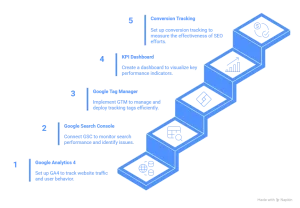
Image Source: Created using Napkin AI.
AI and Automation SEO Errors
AI has transformed SEO workflows, but misuse introduces new risks. Search engines are increasingly capable of detecting low-value, mass-generated content that lacks originality or expertise.
AI should enhance human effort & not replace it entirely.
Common AI-related SEO errors include:
- Publishing unedited AI-generated content
- Scaling programmatic pages without quality control
- Ignoring AI Overviews, voice search, and evolving search behavior
How to use AI safely:
- Use AI as a support and efficiency tool
- Apply human expertise, editing, and judgment
- Focus on value, originality, and user satisfaction
SEO Audit Checklist to Avoid Common SEO Errors
| Audit Area | What to Check | Why It Matters | Recommended Tools |
|---|---|---|---|
| Technical SEO | Crawlability, indexation, robots.txt, sitemaps, server errors | Ensures search engines can access and index key pages | Google Search Console, Screaming Frog |
| On-Page SEO | Titles, meta descriptions, headings, keyword intent | Improves relevance and click-through rates | Ahrefs, SEMrush |
| Content Quality | Depth, originality, E-E-A-T signals, freshness | Builds trust and long-term ranking stability | Manual review, Content audit tools |
| UX & Core Web Vitals | LCP, CLS, INP, mobile usability | Impacts rankings and user engagement | PageSpeed Insights, Lighthouse |
| Backlink Profile | Link quality, anchor text, toxic links | Strengthens authority and prevents penalties | Ahrefs, Google Search Console |
| Analytics & Tracking | GA4 setup, conversions, Search Console data | Enables data-driven SEO decisions | GA4, Google Tag Manager |
Final Thoughts
Most websites don’t fail because of Google updates, they fail due to unresolved common SEO errors that accumulate over time. Sustainable SEO success in 2026 requires technical precision, content depth, strong UX, and data-driven decision-making.
If you want to eliminate SEO issues instead of constantly firefighting them, working with an experienced SEO partner makes a measurable difference. Tangence provides comprehensive SEO services, including technical SEO audits, E-E-A-T focused content optimization, enterprise SEO strategies, and performance-driven execution designed for long-term growth.
Frequently Asked Questions
1. What are the most common SEO errors in 2026?
The most common SEO errors include indexing issues, poor content quality, slow page speed, weak internal linking, and misuse of AI-generated content.
2. How often should SEO audits be done?
A full SEO audit should be performed quarterly, with technical checks monitored monthly.
3. Can common SEO errors cause sudden ranking drops?
Yes. Technical errors, server issues, or content quality problems can trigger rapid ranking declines.
4. Are technical SEO errors more important than content issues?
Both are equally important. Technical SEO enables visibility, while content drives rankings and engagement.
5. Do Core Web Vitals still affect rankings in 2026?
Yes. Page experience signals remain a confirmed ranking factor.
6. Can AI-generated content harm SEO?
AI content without human oversight, expertise, or originality can negatively impact rankings.
7. Should businesses fix SEO errors internally or hire experts?
Minor issues can be fixed internally, but complex SEO problems often require professional expertise for sustainable results.