
blog
Backlinks vs Referring Domains: What Actually Moves Rankings?
Why the Backlinks vs Referring Domains Debate Still Matters
If you have spent any time in SEO, you have likely encountered conflicting opinions about links. Some experts obsess over the total number of backlinks pointing to a website, while others argue that referring domains are the true ranking driver. This disagreement has made backlinks vs referring domains one of the most debated and misunderstood topics in modern search engine optimization.
The reality is not binary. Both metrics matter, but they influence rankings in different ways and at different stages of SEO growth.
In the early days of SEO, Google relied heavily on backlink quantity as a proxy for popularity. More links usually meant higher rankings. As manipulation became widespread, Google adapted. Today, links are evaluated through a far more sophisticated framework that prioritizes trust, diversity, topical relevance, and authority over raw numbers.
This evolution explains why many websites with thousands of backlinks still struggle to rank, while others with fewer links but strong referring domain profiles dominate competitive SERPs. If your link strategy is still focused on volume alone, you’re likely optimizing for vanity metrics rather than real ranking signals.
In this guide, we break down the backlinks vs referring domains debate in a clear, practical, and algorithm-aligned way. You will learn how each metric works, how Google evaluates them today, and how to use both strategically to build rankings that last.

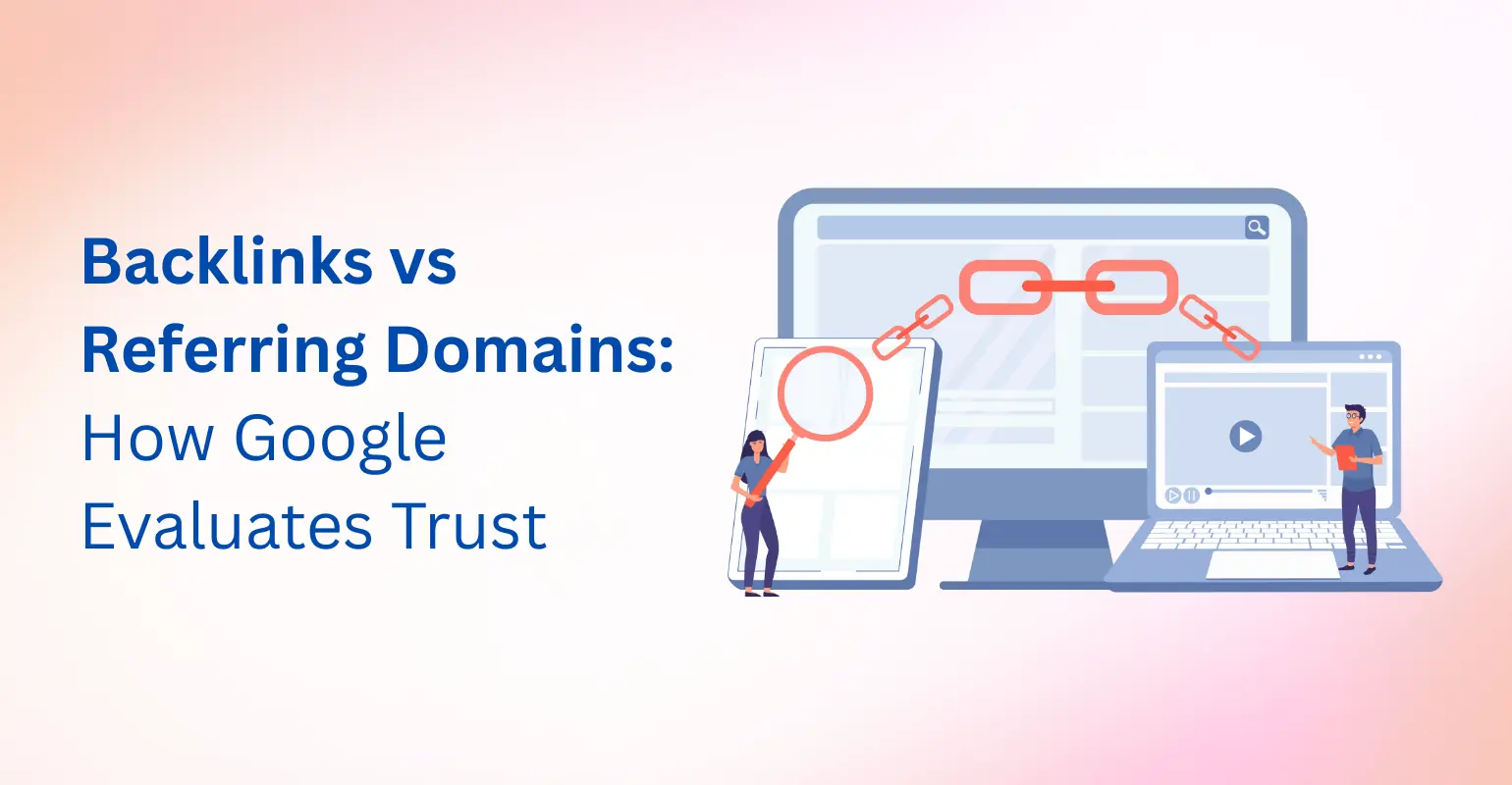
Image Source: Created using Napkin AI.
Understanding Backlinks
Backlinks are one of the oldest and most influential ranking signals in SEO. To understand the backlinks vs referring domains discussion properly, it’s important to look at what backlinks actually represent and why they became so powerful.
What Are Backlinks?
A backlink is a hyperlink from one website to another. When an external site links to your page, search engines interpret that link as a signal of endorsement. In simple terms, backlinks act like votes that indicate your content is valuable enough to reference.
However, search engines do not treat all backlinks equally. A link from a trusted, authoritative, and topically relevant website carries far more weight than a link from a low-quality or unrelated source. This is why modern SEO emphasizes context and relevance, not just link count.
From a technical perspective, backlinks help search engines:
- Discover and crawl new pages faster
- Understand relationships between topics and websites
- Distribute link equity across the web
Why Backlinks Became an SEO Foundation
Google’s original PageRank algorithm was built around backlinks. The logic was straightforward: pages that receive more links from other pages are likely to be more useful. For many years, this model worked extremely well.
As SEO matured, backlinks became the backbone of ranking strategies. Websites aggressively built links through directories, forums, comment sections, and article submissions. At the time, sheer backlink quantity could push almost any page up the rankings.
This historical reliance explains why backlinks are still perceived as the most important SEO metric, even though Google’s evaluation methods have evolved significantly.
Types of Backlinks That Matter Today
In modern SEO, backlinks are evaluated contextually, not uniformly.
High-impact backlink types include:
| Backlink Type | SEO Value | Best Use Case |
|---|---|---|
| DoFollow | High | Passing authority |
| NoFollow | Indirect | Natural profile & traffic |
| Editorial | Very High | Trust & rankings |
| Contextual | High | Relevance & topical authority |
Search engines also analyze anchor text, placement, and surrounding content. One editorial, contextually placed backlink from a relevant site can outperform dozens of low-quality links placed unnaturally.
How Backlinks Pass Authority
Backlinks pass authority based on multiple factors:
- The strength of the linking page
- The trustworthiness of the linking domain
- Relevance between the linking and linked content
- Natural anchor text usage
When backlinks repeatedly come from the same domain, their incremental value diminishes. This limitation is what leads directly to the importance of referring domains and why the backlinks vs referring domains debate exists.
Understanding Referring Domains
While backlinks show how often your content is referenced, referring domains show how many unique websites trust you. This distinction sits at the core of the backlinks vs referring domains discussion.
What Are Referring Domains?
A referring domain is a unique website that links to your site at least once. No matter how many backlinks it sends, it still counts as a single referring domain.
For example:
- 50 backlinks from one website = 1 referring domain
- 10 backlinks from 10 different websites = 10 referring domains
From Google’s perspective, the second scenario represents broader trust and validation across the web.
Why Google Values Referring Domains More
Search engines are designed to detect natural linking behavior. In real-world scenarios, valuable content tends to attract links from many independent websites, not repeated mentions from a single source.
Referring domains help Google assess:
- Popularity beyond a closed ecosystem
- Credibility within a niche or industry
- Resistance to link manipulation
This is why experienced SEOs often prioritize referring domain growth when targeting competitive keywords.
Types of Referring Domains That Impact SEO
Not all referring domains carry equal value. High-impact referring domains typically have:
| Referring Domain Type | Why It Matters |
|---|---|
| High-authority sites | Strong trust signal |
| Niche-relevant sites | Topical authority |
| Media & publications | Editorial validation |
| Industry blogs | Semantic relevance |
A single relevant referring domain can outweigh dozens of backlinks from unrelated or low-quality sites.
Referring Domains vs Linking Pages
One domain may link to your site from multiple pages, but Google evaluates trust primarily at the domain level. Additional links reinforce relevance, but their marginal SEO value decreases over time.
This is why link-building strategies focused only on backlink accumulation often hit ranking ceilings.
Backlinks vs Referring Domains: Core Differences Explained
The difference between backlinks and referring domains may seem subtle, but from a ranking perspective, it’s critical.
Volume vs Trust
Backlinks measure how often your content is linked.
Referring domains measure how widely your site is trusted.
Search engines treat multiple links from one domain as reinforcement, not independent endorsements. Each new referring domain adds a fresh trust signal.
Why One Link From Ten Domains Beats Ten Links From One Domain
Ten independent websites linking to you is far harder to manipulate than one site linking repeatedly. Google’s systems reward patterns that resemble natural editorial behavior.
When evaluating backlinks vs referring domains, Google effectively asks:
- Are multiple independent sources vouching for this content?
- Does this site earn attention broadly or within a closed loop?
- Is the link profile diverse and organic?
In competitive SERPs, referring domains almost always outperform raw backlink volume.
Diminishing Returns of Repeated Backlinks
The first backlink from a domain carries the most value. Each additional link adds less incremental impact. Referring domains, however, continue to expand trust as long as they are relevant and authoritative.
Manipulation vs Natural Growth
Historically, link manipulation relied on generating high backlink volumes from limited sources. Because of this, backlink-heavy profiles with weak domain diversity often raise red flags.
Healthy profiles show steady domain growth, natural link accumulation, and balanced anchors, which is why modern SEO prioritizes referring domains first.
What Google Actually Cares About (Algorithms & Patents)
Google no longer evaluates links in isolation. Updates like Penguin and systems such as SpamBrain analyze quality, intent, and patterns rather than raw counts.
Domain-Level Trust vs Page-Level Links
One consistent takeaway from Google patents is that trust is evaluated primarily at the domain level. Multiple authoritative domains linking to your site signal credibility far more effectively than repeated links from one source. Google explicitly outlines acceptable and manipulative practices in its Google’s link spam guidelines, reinforcing why natural link patterns matter.
Signals Beyond Raw Link Counts
Modern link evaluation includes:
- Topical relevance
- Editorial intent
- Historical link velocity
- Domain diversity and authority
This explains why backlink volume without new referring domains often leads to stagnation.
Why Referring Domains Align With Google’s Goals
Google’s goal is to surface the most reliable content. Referring domains act as independent validators, making them a more resilient and trustworthy signal than sheer backlink volume.
Which Matters More for Rankings: Backlinks or Referring Domains?
This is the question most SEOs really want answered. After understanding how both metrics work, it becomes clear that the backlinks vs referring domains debate doesn’t have a one-size-fits-all answer. However, when it comes to what actually moves rankings, there is a clear priority in modern SEO.
| SEO Scenario | Backlinks | Referring Domains |
|---|---|---|
| New website | Low impact | Very important |
| Competitive keywords | Support role | Primary factor |
| Authority building | Reinforcement | Core driver |
| Ranking plateaus | Limited effect | Breakthrough signal |
Referring Domains Matter More
For most websites and most competitive keywords, referring domains have a stronger impact on rankings than backlinks. Each new, high-quality referring domain represents an independent signal of trust, which aligns closely with how Google evaluates authority today. In practice, we consistently see SEO results driven by authority-led strategies outperform volume-based link tactics over time.
This is especially true when:
- Competing in medium to high-difficulty keywords
- Trying to rank new pages
- Scaling SEO beyond initial traction
Context Determines Impact
While referring domains generally carry more weight, backlinks still play an important supporting role within the right context.
Backlinks tend to matter more when:
- They come from highly authoritative domains
- They reinforce topical relevance
- They support important pages through contextual placement
Why Rankings Plateau Without New Referring Domains
One of the most common SEO plateaus occurs when websites continue building backlinks from existing sources but fail to acquire new referring domains. From Google’s perspective, trust has stopped expanding.
This is why many SEO campaigns see:
- Rising backlink numbers
- Stable or declining rankings
- No improvement in keyword positions
The Smart SEO Takeaway
The most effective SEO strategies prioritize referring domain acquisition first, then use backlinks to reinforce authority within those domains. This balanced approach aligns with how Google evaluates trust, relevance, and natural link patterns.
In short:
- Referring domains drive authority growth
- Backlinks refine and distribute that authority
Understanding this relationship allows you to build links that move rankings instead of just inflating metrics.
How to Analyze Backlinks vs Referring Domains Properly
Understanding the difference between backlinks and referring domains is only half the job. The real SEO advantage comes from analyzing these metrics correctly and using them to guide decision-making. Many websites fail to improve rankings not because they lack links, but because they track the wrong signals.
Use the Right SEO Tools
To evaluate backlinks vs referring domains accurately, you need reliable data sources. Industry-standard tools include:
- Google Search Console
- Ahrefs
- SEMrush
While each tool reports slightly different numbers, the trend matters more than the exact count. Focus on growth patterns rather than isolated spikes.
Here’s how backlinks and referring domains typically appear inside SEO tools like SEMrush when analyzing a real website.
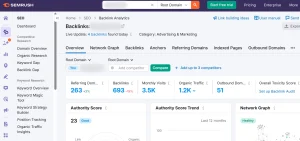
Image Source: Screenshot from SEMrush Backlink Analytics
Metrics That Actually Matter
Instead of obsessing over total backlink count, prioritize these indicators:
| Metric | What to Look For | SEO Insight |
|---|---|---|
| Referring domain growth | Steady increase | Expanding trust |
| Domain relevance | Niche alignment | Better rankings |
| Anchor text mix | Natural variation | Lower risk |
| Domain concentration | Diverse sources | Healthy profile |
Identifying Diminishing Returns
One of the most overlooked aspects of backlink analysis is diminishing returns. If backlink count is rising but referring domains remain static, additional links are unlikely to move rankings.
This pattern often explains why SEO efforts feel “stuck” despite ongoing link-building activity. In the backlinks vs referring domains context, this is a strong signal to shift strategy toward domain acquisition rather than link repetition.
Detecting Toxic or Risky Patterns
A proper analysis also includes risk assessment. Warning signs include:
- Sudden spikes in backlinks without new referring domains
- High percentage of links from a small group of domains
- Excessive exact-match anchors
These patterns can suppress rankings even without a manual penalty.
Best Link-Building Strategy in 2026
As Google’s algorithms increasingly prioritize trust, relevance, and natural link patterns, link-building in 2026 looks very different from older, volume-driven tactics. To win the backlinks vs referring domains game today, your strategy must focus on authority growth without triggering risk signals.
Step 1: Prioritize Referring Domains First
The foundation of modern link-building is consistent acquisition of high-quality referring domains. Each new domain acts as an independent vote of trust and expands your site’s authority. The most effective ways to earn them include original data-driven content, digital PR and media mentions, guest contributions on relevant industry sites, and strategic partnerships. The goal is editorial relevance and diversity, not sheer volume.
Step 2: Reinforce Authority With Contextual Backlinks
Once a referring domain links to you, additional backlinks from that source can still add value. Used correctly, they strengthen topical relevance, pass authority to deeper pages, and support internal link structures. Here, backlinks play a supporting role rather than driving authority alone.
Step 3: Maintain Natural Link Ratios
Healthy profiles show gradual referring domain growth, multiple backlinks from authoritative sites over time, and mixed anchor text usage. Rapid backlink growth without new domains often signals artificial patterns.
Step 4: Focus on Relevance Over Metrics
Relevance consistently outweighs inflated authority scores. A niche-relevant contextual link often outperforms a generic high-metric link.
Step 5: Track, Test, and Adjust
Regularly audit new referring domains, anchor text distribution, and ranking response to ensure link efforts translate into real SEO gains.
The 2026 Reality: Sustainable rankings come from earning trust. Referring domains expand authority, while backlinks refine and distribute it, together driving long-term results.
Final Thoughts
After breaking down the mechanics, myths, and real-world impact, one thing becomes clear: the backlinks vs referring domains debate is not about choosing sides, but about understanding priority.
Backlinks still matter. They help distribute authority, reinforce relevance, and strengthen individual pages. However, in modern SEO, referring domains are the primary driver of authority growth. Each new, relevant referring domain acts as an independent signal of trust, something Google values far more than repeated links from the same source.
This is also how professional SEO agencies approach sustainable growth. At Tangence, SEO strategies are built around authority-first principles, prioritizing relevant referring domains, editorial link acquisition, and content-led growth rather than risky, volume-driven tactics. The goal isn’t just higher rankings, but rankings that last through algorithm updates.
Frequently Asked Questions
1. Are referring domains more important than backlinks for SEO?
In most cases, yes. Referring domains often have a stronger ranking impact because they represent unique sources of trust. While backlinks show how frequently a site is linked, referring domains show how widely it is trusted.
2. How many referring domains are good for a website?
There’s no universal number. A local site may rank with 50–100 referring domains, while competitive national sites may need hundreds or thousands.
3. Can too many backlinks from one domain hurt rankings?
They usually don’t help much and can raise red flags if they look unnatural. Google applies diminishing returns to repeated links from one domain, which is why backlink growth without new referring domains often leads to plateaus.
4. Do nofollow links count as referring domains?
Yes. Most tools count nofollow links as referring domains. While they don’t pass direct authority, they support link diversity, brand visibility, and natural profiles. As Google has clarified, Google treats nofollow links as hints rather than absolute directives. 5. What is a healthy backlinks vs referring domains ratio?
There’s no fixed ratio, but healthy profiles show multiple backlinks per domain, consistent new referring domains, and natural anchor text.
6. How fast should referring domains grow naturally?
Growth should be gradual and consistent. Sudden spikes without real promotion or visibility can look suspicious to Google.
7. Do referring domains matter more for competitive keywords?
Yes. As competition increases, Google relies more on authority and trust, making strong referring domain profiles a decisive ranking factor